
Report by Renta 4
European markets open lower (Eurostoxx futures down 0.5%, S&P futures up 0.6%, Nasdaq futures up 1.5%) whilst Asian markets close higher (Japan’s Nikkei up 1.7%, South Korean Kospi up 1.3%) and news that Trump has signed the memorandum of understanding (following rumours of a possible delay until Wednesday) to end the war with Iran and reopen the Strait of Hormuz, bringing forward the timetable for the agreement to come into force. We must now wait and see whether Iran will take immediate action to open the strait. Crude oil continues to fall; this morning it has been falling by around 2% to below $78 per barrel (down around 5% since Friday).
The signing of the agreement favours Iran, with the immediate lifting of oil sanctions, the release of frozen assets, potential access to $300,000 million for reconstruction and an intact nuclear programme as set out in the memorandum.
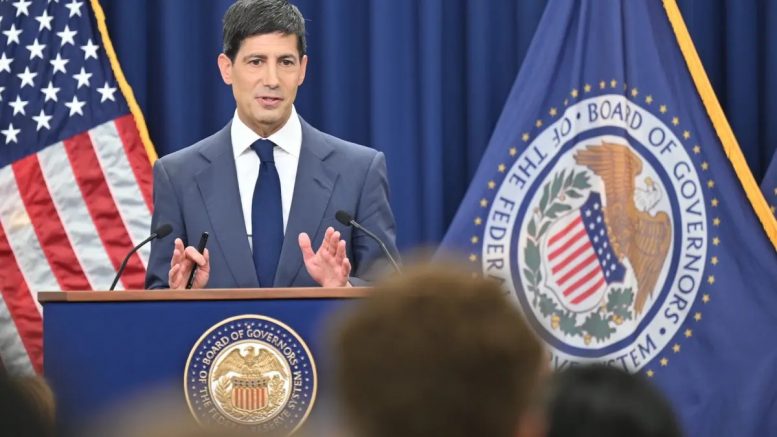
Yesterday, as expected, the Fed kept interest rates unchanged at 3.5%–3.75%, in a unanimous decision (12–0). The most striking aspect of the statement was its brevity (just 130 words compared with the usual 300 or more in recent years). As expected, the accommodative bias has completely disappeared, with no reference whatsoever to the possibility that the next move might be a cut. There is also an explicit acknowledgement of the energy supply shock, which could be interpreted as ‘dovish’ (inflation being transitory), but it removes the ‘forward guidance’ on the direction of the next rate move or on when or under what conditions they will act (here we see the much-feared reduction in transparency, which gives the Fed more flexibility and the market less clarity). However, a new phrase has been included that makes the statement “hawkish”: “the Committee will ensure price stability”, which points to a willingness to raise rates, in a context where it acknowledges that the economy is growing at a solid pace and inflation remains elevated relative to the 2% target.
In this regard, the 2026 GDP forecast has been revised slightly downwards (negative 0.2 pp to 2.2% up), the unemployment rate has been revised slightly upwards (4.3% against the previous 4.4%), whilst core inflation has been revised upwards (0.6 pp to 3.6%).
As for the “dot plot”, a “hawkish” shift: it points to between 0 and 1 rate rise in 2026 (compared with 1 cut of 25 bp in March), between 0 and 1 cut in 2027 (the same as in March) and the long-term neutral rate remains at 3.125%, which means that the committee views current rates as only slightly restrictive.
Of the 18 members, nine project at least one rate rise in 2026 (six of them project several rate rises and only one projects a cut), whilst Warsh has not contributed to the ‘dot plot’, as expected (the first time this has happened for a chair since the ‘dot plot’ was introduced in 2012), a sign that the new Fed chair does not wish to commit to any particular interest rate path. The market is taking a “hawkish” view”, now pricing in rises of 36 bp in 2026 (against 21 bp previously) and 8 bp in 2027 (unchanged). The market reaction: a sharp rise in short-term yields (2-year yields up 13 bp to 4.18%) but long-term yields held steady (10-year T-bond up 5 bp to 4.48% on the back of confidence in the fight against inflation), a rise in the dollar (up 1% to 1.15 against the euro) and stock market falls (down 1%–2% following Warsh’s speech).
Furthermore, Warsh announced the creation of five working groups to reform the Fed, which will be much discussed in the future due to their implications for the Fed’s monetary policy: 1) Communication (review of the macroeconomic projections and the ‘dot plot’); 2) Balance sheet (will analyse the benefits and risks of the current regime of ample reserves); 3) Data sources (possible alternative measures of inflation, e.g. the trimmed mean of the Dallas PCE); 4) Productivity and employment (specifically analysing the impact of AI and new technologies on the labour market and their implications for monetary policy, which is in line with the view that AI is deflationary in the medium term and would allow for lower interest rates); and 5) Inflation frameworks (examining the drivers of inflation and the range of price stability in a changing economy).
Looking ahead to today’s session, attention will be focused on the Bank of England meeting, which is expected to keep rates unchanged at 3.75%. A significant split in the vote is foreseeable given conflicting data: higher inflation and lower growth. Looking ahead, the market is pricing in a 25 bp rise by the end of 2026 and a minimal probability of a further 25 bp rise in Q1 2027, which would represent a softening of the two rate rises prior to the peace agreement (59 bp against the current 34 bp), although everything will depend on whether there are second-round effects (more likely if inflation exceeds 4%).
The central banks of Switzerland and Norway are also due to meet today, with no changes expected to interest rates (0% and 4.25% respectively), just as Sweden’s Riksbank did yesterday (1.75%). In the case of Switzerland, the market is pricing in stability for the rest of the year (very low inflation supported by an appreciating Swiss franc due to its status as a safe-haven asset), and a 25 bp rise for Norway (higher inflation and rising labour costs).
On the macro front, weekly unemployment figures for the United States (225,000e compared to 229,000 previously), the Philadelphia Fed’s preliminary manufacturing survey for June (10 compared to negative 0.4 previously) and the Leading Index (0.1%e compared to the previous figure) are due to be released.


