
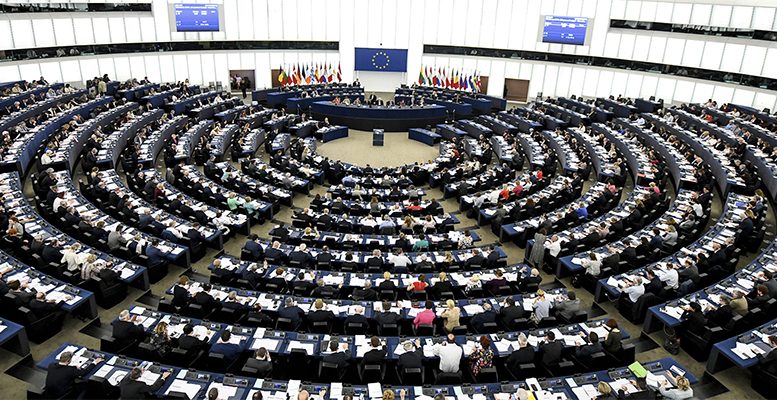
The more than 600 amendments tabled make it impossible to stick to the planned timetable and adopt the comprehensive reform of the Sustainable Finance Disclosure Regulation this month. The so-called SFDR 2.0 – which would do away with the classification currently used by asset managers (under ‘Article 8’ and ‘Article 9’) – will not reach the Committee on Economic and Monetary Affairs for the final vote, and its subsequent ratification in the European Parliament’s plenary session, until the autumn.
The legislative process for SFDR 2.0 (the comprehensive reform of the Sustainable Finance Disclosure Regulation) has been delayed. Following the revision proposal launched by the European Commission at the end of 2025 and the EU Council’s approval of the negotiating mandate last June, all eyes are now on the European Parliament, where the political groups are attempting to reach a compromise agreement to resolve the key sticking points.
The main reason for the slowdown is the enormous volume of technical work involved. The rapporteur, MEP Gerben-Jan Gerbrandy, presented his initial draft in the spring of 2026. However, the other Members of the European Parliament have tabled more than 600 amendments to the text. Reviewing, negotiating and consolidating these proposals into viable compromises has taken far longer than anticipated, forcing a delay to the voting schedule.
The initial roadmap had envisaged that the crucial vote in the Committee on Economic and Monetary Affairs would take place in mid-July 2026. It is now estimated that the final vote and its subsequent ratification in the European Parliament’s plenary session will be postponed until early autumn.
With the Parliament’s official position being delayed, the three-way negotiations (trilogues) between the Commission, the Council and the Parliament are not expected to begin until late October or November 2026 (whereas they were originally expected in September).
The delay is not merely bureaucratic; it is also political. There are profound differences between what the Council (the Member States) is proposing and what is being debated in Parliament:
The product categories under discussion are: The Council is calling for three clear categories (Transition, ESG Basics and Sustainable). However, there is debate in Parliament regarding the boundaries of these labels and whether the minimum criteria should be tightened to prevent greenwashing.
MAI (Major Adverse Impacts) indicators: Whilst the Parliament’s draft seeks to make certain disclosures more stringent, the Council has proposed flexibility and grace periods (for example, exemptions of up to three years to adapt transition portfolios).
Professional vs. retail investors: There is intense debate over whether funds intended purely for institutional investors should have the same transparency obligations as those aimed at the general public.
The SFDR 2.0
The most significant changes introduced by this “version 2.0” include:
The end of “Articles 8 and 9”. Under the original regulations, funds were categorised according to the section of the law they complied with: those under Article 8 (which ‘promoted’ ESG characteristics / ‘light green’) and those under Article 9 (with specific sustainable objectives / ‘dark green’). As the law was not intended to be a labelling system, this led to chaos in the market.
SFDR 2.0 does away with this model and creates three official, voluntary categories:
Transition Category: For funds that invest in sectors or companies that are not yet sustainable but are on a credible path towards decarbonisation or improvement.
Sustainable Category: For investments in projects or companies that already meet the highest ESG standards or are aligned
ESG Basics Category: For financial products that simply incorporate environmental or social factors into their strategy at a basic level. with the EU Green Taxonomy.
For a fund to be able to use any of these three labels (and market itself as ‘green’ or ‘sustainable’), SFDR 2.0 requires a minimum threshold of 70 per cent of its portfolio assets to be aligned with the category’s objective. Furthermore, it introduces an obligation to exclude harmful industries (such as certain fossil fuels or controversial weapons) across the entire portfolio.
If a fund in the Transition or Sustainable category also demonstrates that its investments generate a measurable and real positive impact on the world (for example, building a specific wind farm), it will be permitted to add an ‘Impact Strategy’ designation, thereby being legally entitled to use the word ‘Impact’ in its trading name.
The proposal removes some of the more cumbersome entity-level disclosure requirements, such as certain breakdowns of MAIs (Major Adverse Impacts), as this information is already covered by other, more recent legislation such as the CSRD (Corporate Sustainability Reporting Directive). The aim is to make the information more accessible to the average investor.


