
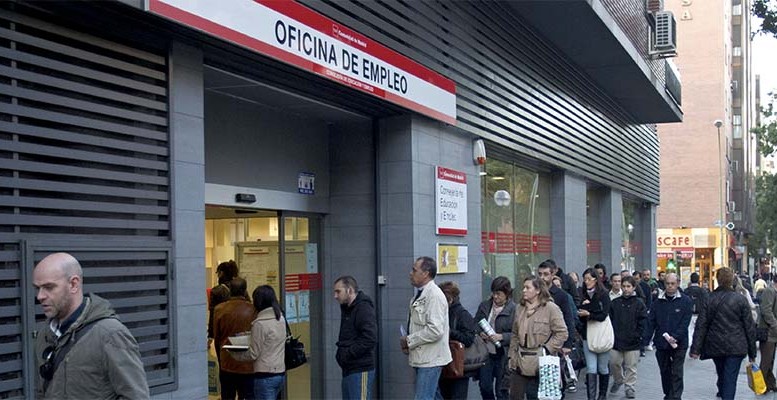
The number of registered unemployed rose by 43,128 people compared to the previous month (+1.81%), bringing the official unemployment figure to 2,422,633 people. This increase is double that recorded in October 2025 (when it rose by 22,101 people) and marks the worst year-on-year record for an October in the last 5 years.
The USO union dismantled the triumphalism surrounding the “record” figure of 22,624,165 average Social Security affiliates. This figure does not correspond in any way to an actual increase in direct employment. Official statistics misleadingly include non-working groups as “employed affiliates”: recipients of the over-52 subsidy, unemployed individuals receiving contributory benefits, and interns in unpaid internships.
Furthermore, if we add those with limited availability (397,995) and other non-employed individuals (189,782) to registered unemployment (2,422,633), and include those affected by ERTE (furlough schemes) and inactive permanent-discontinuous workers (who exceed 800,000 according to the latest finalized data), the total number of people without real employment in Spain exceeds 3.8 million actually unemployed (3,810,410). USO insists: “In Spain, there are more than 3.8 million people who want to work and cannot; we cannot hide them under bureaucratic headings instead of addressing the problem.”
USO highlighted the alarming precariousness embedded in the labor market through high turnover and multiple jobholdings. To achieve the annual affiliation balance, 16,172,238 contracts had to be signed—an excessive average of 20.6 contracts per affiliate over the last 12 months (1.72 contracts per person per month). Permanent contracts have ceased to be synonymous with stability: only 17% of total monthly contracts were full-time permanent positions, while involuntary part-time work and ultra-short-term “matchstick contracts” soared, with over 35,000 workers having to sign more than one permanent contract in the same month just to get by.


