
Inflation Is Not Dead, It’s Just Changed Course
As long as there is no perfect equivalence between supply and demand, inflation will form part of our system, according to Robeco.

As long as there is no perfect equivalence between supply and demand, inflation will form part of our system, according to Robeco.

This was heard at Jackson Hole: “The cyclical recovery was gathering both pace and geographical breadth, thanks in part to the stimulus efforts of central bankers, the European Central Bank president said, adding that even if inflation remained low, the euro area economy was “gaining ground”. The Fed and the ECB feel they have done all they could. What a cop-out!

Pablo García Gómez (Carax Alphavalue) |Sector earnings from Europe for the second half of 2017 have been overall solid, with some positive surprises from “heavy cyclicals” like oil and metals and mining.

Kommer van Trigt (Robeco) | The markets are discounting that in the next few months there will be more certainty surrounding the central banks’ normalisation strategy. In its quarterly outlook, Robeco’s Global Fixed Income Macro team says it makes sense for the central banks to begin to normalise their policies.

The Fed signed five major swap arrangements with allied central banks that totaled more than $580 billion in 2008, whereas the People’s Bank of China signed more than 30 bilateral currency swap agreements valued at $490 billion in year 2017.
Despite quantitative easing and 3 years of more synchronised developed economy growth, it is not clear that inflation has really got any traction. Technology, globalisation, unemployment and changes in working practices have all contributed to the lack of inflationary pressures and still do.
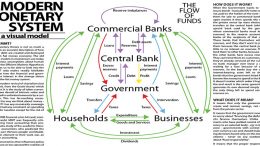
There’s a new monetary theory doing the rounds here which claims to be revolutionary: the Modern Monetary Theory (MMT. Not to be confused with the Market Monetary Theory). I agree with some of its points. But when some of its supporters say the state deficit and debt are not important – that they don’t have damaging consequences – the theory becomes a huge deliberate fallacy.
I believe central banks don’t control long-term rates – which are decisive for investment – and that they can influence them in what we would call normal circumstances, namely when GDP is expanding and inflation is at its optimum level. The central bank trys to control the private market’s expectations, but it doesn’t always succeed.
Francesco Saraceno | Munchau recently argued that central banks’ choices are increasingly political in nature, especially if their mandate is broad, as is the case for example of the Fed. His argument is that a broad mandate implies tradeoffs, and as such it does not go well with central bank independence.
The last meetings of the Federal Reserve and the Bank of England have fuelled sharp moves in the major currencies. The euro has extended its year highs against the dollar (it’s over 1,08 against the greenback) and on Thursday it appreciated over 1.3% against the pound (the exchange rate is at 0,86). Is near a new “currency war”?