
Report by Bankinter
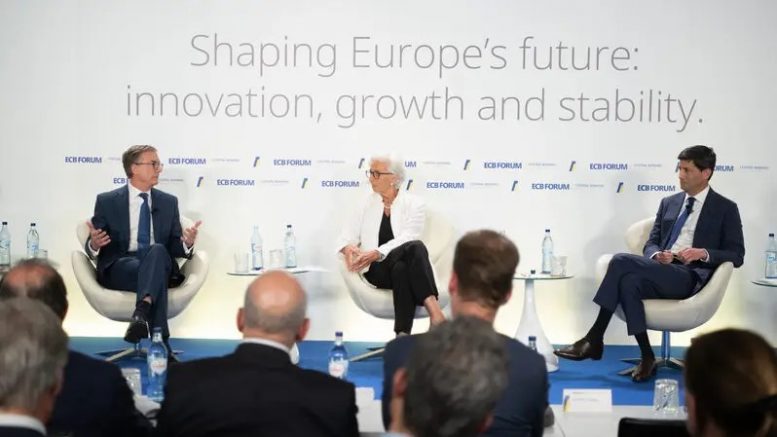
Speaking at the monetary policy panel of the Central Bank Forum in Sintra (Portugal), Christine Lagarde emphasised that “the risks are now more balanced than they were two weeks ago” when the ECB decided to raise interest rates. The threat of prices spiralling out of control is lower following the agreement between the US and Iran to reopen the Strait of Hormuz, which reduces the need for the ECB to act swiftly and decisively. Lagarde pointed to the greater speed at which factors such as the price of oil are changing in these uncertain times. According to the ECB President, central banks must be prepared to assess risks more accurately and swiftly, even using AI tools to strengthen the robustness of their decisions under different scenarios. Lagarde advocates what she has termed “framework guidance”, which aims to inform investors about the ECB’s decision-making process and the indicators and risks that weigh most heavily in its decisions. In this way, expectations can fluctuate as data and the economic environment do.
Just yesterday, inflation in the eurozone provided a pleasant surprise for the ECB, falling to 2.8% in June – a drop of four tenths of a percentage point compared with May – and bringing an end to a four-month run of increases. The rapid moderation in oil and gas prices following the peace agreement announced by Iran and the United States – with prices returning to pre-conflict levels despite occasional breaches by both sides – gives monetary authorities greater room for manoeuvre. Our scenario does not envisage any further interest rate rises by the ECB.
For his part, the new Fed chairman, Kevin Warsh noted that inflation expectations and inflationary risks had eased in recent weeks. He also announced that the Fed’s monetary policy makers would decide whether to adjust interest rates “meeting by meeting” and that any attempt to elicit forward guidance from them would be fruitless.
Warsh’s softer, more dovish tone, pointing to lower inflationary risk, led the market to slightly reduce its expectations of a Fed rate rise in September. Our base-case scenario does not envisage any rate rises this year. In fact, we believe the Fed’s next move will be a cut in 2027, as inflation (currently at 4.2%) gradually returns to pre-conflict levels.


