
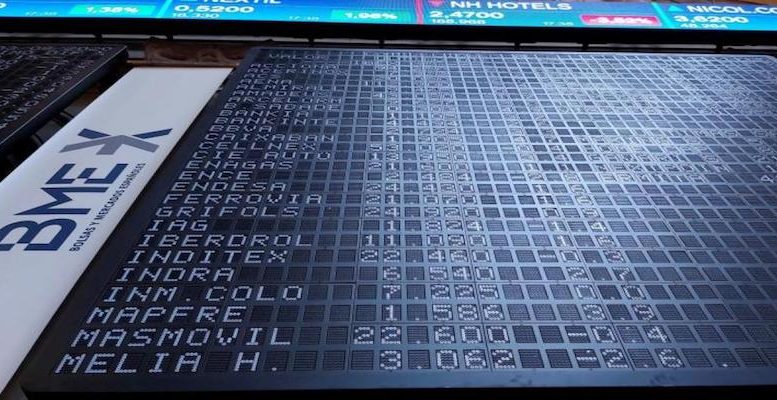
The Ibex 35 closed virtually flat on Monday, down 0.01% to 20,173 points, in a session marked by investor caution. The Spanish benchmark index thus held onto the 20,000-point mark, having reached recent highs last week.
The trading day was influenced by developments in the geopolitical situation in the Middle East and, in particular, by uncertainty surrounding the Strait of Hormuz, which had a direct impact on the energy markets. Oil prices rose again, with Brent crude approaching $86 per barrel.
Among the Ibex constituents, ArcelorMittal led the gains, rising by 2 per cent, followed by Repsol (up 1.82 per cent) and Indra (up 1.55 per cent). On the downside, Aena (down 1.97 per cent), Grifols (down 1.72 per cent) and Cellnex (down 1.71 per cent) recorded the biggest falls.
In the corporate sector, Técnicas Reunidas came under pressure after it emerged that Bahrain’s state-owned oil company, Bapco, may call on guarantees worth around €418 million against a consortium in which the Spanish company is a participant.
In Europe, the main indices also saw little change. The STOXX 600 remained close to all-time highs, buoyed by strong corporate earnings. Estimates point to growth of around 21 per cent in second-quarter profits for companies in the index.
On the macroeconomic front, the improvement in eurozone investor confidence stood out. The Sentix index rose by four points in August to 0.9, entering positive territory for the first time during this recovery phase. Current conditions improved by 6.8 points, whilst expectations rose by 10.3 points.
The markets now face a week with several key indicators. On Wednesday, the US CPI for July will be released, whilst on Thursday the UK’s second-quarter GDP and Spain’s final inflation figures will be published. On Friday, it will be the turn of the eurozone’s second-quarter GDP.


