Articles by The Corner

About the Author

The Corner
The Corner has a team of on-the-ground reporters in capital cities ranging from New York to Beijing. Their stories are edited by the teams at the Spanish magazine Consejeros (for members of companies’ boards of directors) and at the stock market news site Consenso Del Mercado (market consensus). They have worked in economics and communication for over 25 years.


swiss 21

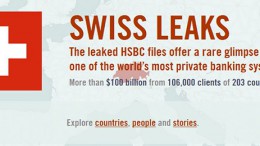
Swiss leaks: HSBC under fire after admitting to have helped conceal $100 billion

MADRID | The Corner | After the biggest banking leak in history, British bank HSBC admitted on Sunday that its Swiss subsidiary systematically helped big fortunes dodge taxes and hide millions of dollars of assets. Switzerland and the whole industry are under the spotlight: long known for its banking secrecy, the country signed a fiscal transparency agreement with Brussels in 2004 which has proved insufficient. A new, enlarged version of the accord is being debated now and expected to be ready in 2018. But will it be enough? And what until then? 


prueba fiat panda diesel 57

Mixed news for Spanish economy

MADRID | The Corner | Spanish Industrial Production figures proved disappointing on Friday, with results revealing that the sector had fallen 0.3% month-on- month and 0.9% year-on- year. The figures will be of some concern to the Finance Ministry given that the economy has recorded seven consecutive months of negative inflation. 


grek banks

Pressure on Greek debt: A nudge or a punch in Athens’ face?

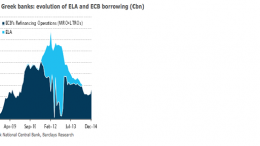
MADRID | The Corner | Despite the markets’  first negative reaction to the ECB’s restricting Greece access to its direct liquidity lines, Morgan Stanley analysts reminded on Thursday that nobody should be that surprised: in 2012, one third of the Greek balance sheets were financed by the ECB, and most via ELA. Plus, Greek banks can still get ECB liquidity if they use ECB eligible collateral.


greece demonstration

Less is more: The Greek government needs a chisel, not a sledgehammer

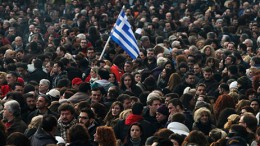
By Jens Bastian via MacroPolisThe parliamentary majority achieved by the SYRIZA-led coalition government following the 25 January elections constitutes a strong political mandate in mathematical terms. Among one of the many immediate challenges facing the new administration is trying to translate its numerical advantage into a majority of support among Greek citizens, including those who did not vote for the senior coalition party. 


Grexit no

Greece and common political sense

LONDON | Sigrún Davíðsdóttir | Forget economics, politics is key to understanding the Eurozone. The cries of  “Grexit”  lately have mostly been a repetition of an earlier discourse: in February 2012 Citi’s economists Willem Buiters and Ebrahim Rahbari coined the term “Grexit,” by July 2012 estimating its likelihood to 90%. Cheered on by the media, economists have taken over the debate of the Eurozone which is why much of it has been such a futile exercise: it is not economics, which ties the Eurozone together but the political determination of its leaders to make the euro work. With political will likelihood of any exit is 0. Ergo, Grexit is as unlikely now as it has always been in spite of the EU brinkmanship. One route Greece seems to be exploring is a tried and tested one: the “bisque clause” from 1946.