Markets

No Picture

Markets welcome Eurozone economic ‘bad news’

MADRID | By J. J. Fdez-Figares (LINK) | Stock markets face today a new week in which geopolitical conflicts, especially in Ukraine, and macroeconomic data that will be announced during the day will monopolize the attention of investors. Although we expect trading volumes remain low, typical of summer dates, we do expect a slight rise in volatility, especially given the current stage of confusion, both in the geopolitical and economic environment that financial markets are facing.

120906Bolsa2

Ibex: -5.8% in the first 5 sessions of August

MADRID | By J. J. Fdez-Figares (LINK) | European stocks closed yesterday again with notable declines -with the exception of the Swiss- pressured by a complicated geopolitical scenario, while the macroeconomic figures in the region continue to disappoint. Thus, European stock markets began the day in negative tone after economic sanctions agreed by Russia against the European countries and with the speculation that the country will send troops to Ukraine. The Spanish index Ibex 35 goes through the worst beginning of August since 2011.


genel mudurluk gorsel

ING could bring forward the return of €10bn public aids

MADRID | The Corner | ING Group 2Q14 underlying net profit of EUR 1,181 million from EUR 901 million in 2Q13 and EUR 988 million in 1Q14. The company has announced that it would repay the state aid received in 2008  earlier than planned (May 2015) and confirmed the growth targets for 2017 (as well as the payment of dividends, with a payout of 40%), set last March.


No Picture

EZ investor confidence dropped to its lowest level in a year

MADRID | The Corner | The Eurozone Sentix Index fell 2.7 points in August, its lowest level in a year, from 10.1 reached in July. The analysts’ consensus had expected that the indicator would go back to 9 points. Sentix attributes in a press release this decline to the approved economic sanctions against Russia and points out that “As this slump derives from an event which is subject to politics and power play, the central banks, particularly the European Central Bank, will have difficulty in trying to counter this.”


image005

UBS: Q2 European earnings – 40 months of downgrades…

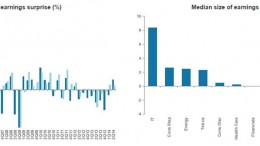
BERLIN | Alberto Lozano | In Europe the publication of first half results is about to end with 2/3 of companies having already published. The data shows that European companies are coming out of the long period of downgrades and are regaining positive terrain in earnings. A stronger euro has been a headwind to revenues this quarter and the worsening relations with Russia might disturb this European recovery in the coming months.


bescorner

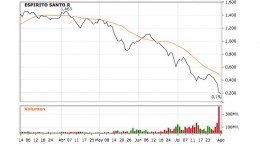
The decline of nearly 40% of BES shares hampers the European financial sector

MADRID | The Corner | The Western stock indexes closed yesterday with prominent drops, reaction for which there was not a single trigger, but the sum of the various concerns that have been accumulating in recent days. The negative tone was maintained throughout the day, closing both European and U.S. stock markets near daily lows. It is important to emphasize the volatility increases, measured by the VIX index, which has reached its highest level of the last three months.


australia

Do Aussie central bankers have a “good enough” solution?

Benjamin Cole via Historinhas The Reserve Bank of Australia (RBA) shoots for an “inflation band” of between 2 percent and 3 percent, and the Aussie economy (as recently illustrated here by Marcus Nunes) has been among the best-performing following the 2008 Great Recession. Could it be that simple? Should central banks merely shoot for a somewhat flexible and slightly higher inflation target? Worth noting is the People’s Bank of China has overseen much prosperity with a 4 percent inflation target.


BES

Morning coffee: Argentina, BES and other summer intrigues

MADRID | The Corner | Juicy day for European markets, peripheral and emerging countries, after Portuguese BES announced €3.6 billion losses in 1S14, which reduce its CT1 to 5%, below the 7% asked in Portugal. Besides, we’ll be very attentive to how Argentina’s so-called “second default in 12 years” (we are working on an analysis explaining why the real problem lies on the US judge’s sentence) unfolds –late on Thursday S&P rated the country as selective default after it didn’t come to an agreement with a group of its bond-holders. Stay tuned!


sp5001

Earnings season: Mixed feelings on both sides of the Atlantic

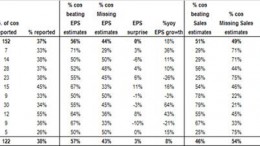
MADRID | The Corner | We’re in the middle of second-quarter earnings season and companies are showing their cards to investors. Note the difference on both sides of the Atlantic: in the US, 53% of S&P500 firms have posted their results and 78% have performed better than expected (average surprise of 6%, JP Morgan analysts pointed out). EPS growth is of 11% yoy, while sales went up by 5% with 67% of companies having better than expected numbers. Meanwhile in Europe, with 152 SXXP companies having posted their results, 56% have turned in an average +0.4% EPS. Year-on-year EPS has risen by 18% (8% if we exclude financial entities), although yoy sales decreased by -2%.