Spain to lead the EU energy transition
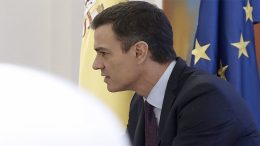
In June 2018 the European Union agreed a 32% EU renewable energy target for 2030.Several member states tried to push for an even higher target of 35%. Spain was among them.
Raimundo Poveda | Spanish banks must find somewhere to invest. Their retail credit, for now with a low level bad debts, has been growing at an accelerated rhythm for the last couple of years. But that is where the good news ends. Credit for house purchases, by far the most important component in household credit, and in all private sector credit, continues to fall (2.5% in 2017).
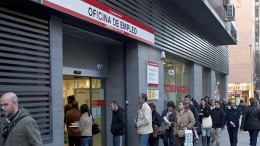
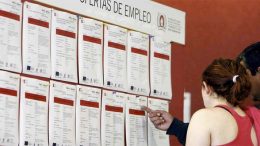
According to the estimates of BBVA Research, social security enrollment increased 0.8% in second quarter , and unemployment reduced 1.6%.
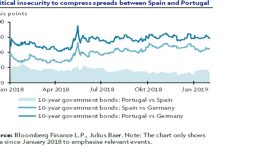
Now “the waters appear to have calmed” in Italy, analysts at Intermoney, however, believe we will see more episodes of tension originating in Italy. The key moment is likely to come at the end of the summer or in the autumn. This situation should be seen as a scenario for tension rather than rupture, although contagion to other peripheral economies could be possible.
Raimundo Poveda | Strong increases in Madrid, Barcelona and other cities (of the order of 7% in prices and apparently more in rents) coincide with stagnation in the rest of the country, and even falls in five autonomous communities. Also, the 45,000 transactions per month last year still pale in to the 75,000 per month of 2004-2007. It makes no sense to talk about a bubble.
Bankia Estudios | For a second successive year, the arrival of immigrants has invigorated the Spanish population, otherwise stuck in organic stagnation. Although the increase is modest, in the end it is hopeful as it means an intensification of the rhythm identified in 2016 (0.2%).
In countries such as Germany and Austria, the unemployment rate has remained relatively low for a long period of time. As noted by CaixaBank Research experts, one of the keys to their success are apprenticeships, or dual vocational education and training. To what extent can this formula be applied to other countries in Europe like Spain?
The recovery of the Spanish economy has shown strong growth in more than just GDP. Exports of goods and services have grown considerably from 25.6% of GDP to 34.4% between 2010 and 2017, while employment has also shown notable growth (1.9 million more people in work since Q2 2014). This increase in exports is not only helping to create jobs, but whatsmore, to improve the quality of employment.
William Chislett (Elcano Royal Institute) | Spain was ranked 11th out of 110 countries in the 2017 Elcano Global Presence Index, which measures the results of internationalisation, up from 12th in 2016
J. L.M.Campuzano | Spanish household debt continued to reduce in 2017, reaching 61% of GDP (down 3%), according to the Bank of Spain. It has fallen 24% since its máximum level reached in 2010. Company debt at the end of the year amounted to 78% of GDP, with a fall of 5% over 2016. Company debt has fallen 39% since its maximums.