
World economy

How a government shutdown affects the economy

Crédito y Caución Forecasts A 4% Increase In Insolvencies In The United States

Trade barriers are causing more insolvencies in the agricultural sector, while the retail sector is vulnerable to rising import costs. Crédito y Caución expects the United States to deepen its slowdown in 2020. The Spanish credit insurer expects GDP growth of 1.7%, largely supported by private consumption in the face of weak investment, public spending and exports. Although household finances are in better shape than a decade ago, among companies there has been an increase in debt and a deterioration in their credit capacity.


Which central bank blinks and cut rates first?

Which Central Bank Blinks And Cuts Rates First?

TwentyFour Asset Management’s CEO Mark Holman thinks central banks will move on rates any time soon, but where the first move comes from might be harder to call. They are sure it will not be the UK, thank goodness and also sure it won’t be the ECB. It won’t be the US in the near future either.


investors equities

Impact Of Coronavirus On Fixed Income

By Kevin Flanagan, (Head of Fixed Income Strategy, WisdomTree) / This year has got off to an unusual start in the financial markets. Typically, the focus would be on the Federal Reserve (Fed) and/or economic developments, but unfortunately the coronavirus has taken centre stage. I thought it would be useful to offer some insights from a bond market perspective, using the SARS (Severe Acute Respiratory Syndrome) outbreak of November 2002 to July 2003 as a comparative event.____¨


How effective is China’s response to the coronavirus outbreak?

How Effective Is China’s Response to the Coronavirus Outbreak?

Compared to the SARS epidemic, it is clear that the way in which China has responded to this virus is a major departure from its posture back in 2003. It is clear that Beijing has learned its lessons. This time, the Chinese government informed the World Health Organization on December 31 about the new virus which had been identified on December 26. With the SARS crisis, they did not report the virus to the WHO until four months after the first case was detected.


gold-price-reflects-real-interest-rate

Gold: Tossed And Torn By The Virus

As investors are still struggling to properly price the impact of the coronavirus, volatility in financial markets remains elevated. Risk-on sentiment returned to the markets yesterday, putting pressure on gold. Barring a longer-lasting impact on Chinese growth, we do not expect much more fundamental short-term support from the virus for gold. However, on a longer-term horizon we still see upside and maintain a Constructive view.


Latin America is the fourth largest investor in Spain?

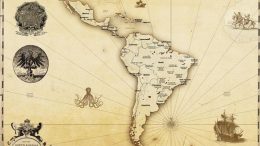
Latin America Is The Fourth Largest Investor In Spain

Latin American investment abroad reached 38,255 million dollars in 2018, an amount similar to that of the previous three years. The main investors were Brazil and Mexico, and to a lesser extent Colombia and Uruguay. Latin American Foreign Direct Investment (FDI) in Spain amounts to 40,517 million euros, which represents an increase of 200%, in the last ten years.


Don't fear the Libra - worry about retail central bank digital currency instead

Don’t Fear The Libra – Worry About Retail Central Bank Digital Currency Instead

A retail central bank digital currency (“CBDC”) could be a major concern for European commercial banks. Recent central bank commentary suggests to Bank of America Global Researh that the likelihood of a CBDC being launched is increasing. This year, the ECB has published a position paper on a retail digital currency, and the BIS has announced a group of six central banks will study the topic. Analysts at BofA have three key concerns about this.


coronavirus china

2003 SARS Cut China’s GDP By 1.1%, But Spill-Over From Coronavuris Would Be Bigger

Most economists were probably expecting a fairly easy ride at the beginning of 2020. However, unforeseen exogenous events such as the outbreak of China coronavirus are standing in the way, generating a high level of uncertainty. In the opinion of Gilles Moëc , Chief Economist at AXA IM, that now ” economic policy could be on autopilot is not very consensual”.


Quantitative easing now looks permanent – and has turned central banks into pseudo governments

Quantitative Easing Now Looks Permanent–And Has Turned Central Banks Into Pseudo Governments

via The Conversation | After a pause of a few months, the world’s leading central banks are “printing” money again to try to bolster their economies. Commonly known as quantitative easing or QE, the European Central Bank (ECB) resumed its programme just before the turn of the year. The backdrop is lukewarm growth, a looming recession in Germany, and persistent fears of Japanese-style deflation.