World economy

euro.growth

Global Insolvencies Could Increase By 26% In 2020

In Spain, the increase foreseen by Crédito y Caución reaches 30%, due to the sectorial composition of the economy. The credit insurance company forecasts an increase of 26% in corporate insolvencies worldwide, which will largely materialize during the second half of 2020.





dollar rally

The Weak Dollar: Why It Won’t Be Replaced As Global Reserve Currency

Arturo Bris via The Conversation | Stock markets have been very strange this year. For international investors in general, currency risk – above all the weakening of the US dollar – has become the most important financial risk of the year. For a European investor, for example, US markets have yielded about 5% in US dollar terms) in the first eight months of 2020. Translated back into euros, however, that return is 0.5% because of the depreciation of the US dollar over the past two months. 


Japanese general

“Same Wine, Different Bottle” – What Next For Japan?

Today’s official resignation of Japan’s PM Shinzo Abe ended weeks of speculation following a number of hospital visits over the past month (…) The two front runners for Prime Minister are probably Shigeru Ishiba (photo) and Fumio Kishida. While neither would be likely be politically revolutionary, Ishiba has been more critical of Abe in the past and was recently quoted saying: “We need to rethink everything about Japan… Stocks are not the whole economy. We need to change the system where all wealth accumulates with stockholders and people who manage companies.” Given his more populist stance it is unsurprising that he is popular, regularly topping public polls for the preferred next PM. Kishida by contrast has been moulded and promoted by Abe himself, and never will the cliché above be more true than if he is chosen to take over from his political mentor.


White House 1- Fed 0

Fed Monetary Policy Review – No FAIT But What We Make

David Page, Head of Macro Research at AXA Investment Managers | Federal Reserve Chair Powell delivered the first shared address to a (virtual) Jackson Hole Monetary Conference. He delivered the conclusions of the Fed’s Monetary Policy Review, a process that was started in early 2019, and was due to be announced earlier this year, before the pandemic delayed the release. The Review maintained the broad pillars of Fed policy making: a dual mandate with employment and price stability goals, with price stability defined as 2% over the long term. However, it made three changes…


FEDBALANCE

The Real Challenge Facing The Fed

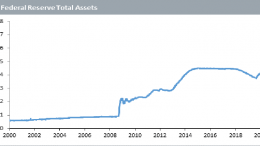
Mobeen Tahir, Associate Director, Research, WisdomTree | The biggest challenge facing the Fed in the coming months (and years) is to sketch a roadmap for closing the floodgates of liquidity. At this point in time, it might seem like a ‘nice problem to have’. But given long and variable lags between policy implementation and impact on economy, these are issues the Fed needs to be thinking about now. While the Fed’s mandate is to promote maximum employment and ensure price stability, markets have become highly dependent on central bank accommodation as a propellant. As unemployment (currently 10.2% in the US) decreases and inflation (US Core Personal Consumption Expenditure Index inflation is currently 0.9%) rises closer to the Fed’s desired target level of 2%, the central bank will need to tighten policy.


Jay Powell

Inflation Is The Key

Chris Iggo (AXA Investment Managers) | Next month the Fed is expected to announce some changes to its long-term monetary policy framework. Many observers expect that to include an “average inflation target” which in theory means the Fed will allow inflation to rise above 2% for a long enough period to compensate for when inflation has been below 2%. It likely will need to back this up with forward guidance suggesting that rates won’t be increased until it is convinced its inflation target (and maybe an unemployment target) has been met. 


Gold

A Moment In Markets – Was It A Shift In Sentiment?

Mobeen Tahir, Associate Director, Research, WisdomTree | On Tuesday, 11 August, gold fell by over 5% and silver retreated nearly 15% prompting investors to wonder if there had been a material shift in market sentiment. Are defensive hedges no longer required? How important are gold and silver as risk sentiment improves? A glance towards the wider market, and indeed economic fundaments, can help answer these questions.


US flag

U.S.A… The perfect storm

BBVA Research | Bureaucratic missteps by the CDC and the FDA, contradictory messages from elected officials, disregard for intelligence reports, science and experts, lack of medical equipment, years of underfunding public-health departments, spread of misinformation, and private healthcare institutions with misaligned incentives created the perfect storm. Unfortunately, the number of deaths will increase further. According to the Institute for Health Metrics and Evaluation, total deaths could reach 205K to 524K by December 1, implying that Covid-19 will rank as the third leading cause of death in 2020, after heart disease and cancer.