

This Thursday marks three months since the start of the Iran war, whilst peace negotiations continue – negotiations that do not appear to be bearing fruit. Meanwhile, the energy crisis continues to take its toll on the global economy. In fact, Scope Ratings forecasts that “the price of oil will average around $100 per barrel in 2026 and that, from then on, it will fall only gradually, remaining in 2027 above pre-conflict levels” (if the war ends before then).
Reported by Carlo Capuano and Eiko Sievert
The conflict in the Middle East will weigh on global growth, although the impact will be uneven: the economies of the eurozone and Asian countries will be the hardest hit should the conflict drag on, although all regions will face higher inflation this year.
As negotiations continue to end the conflict between the United States and Iran, the Strait of Hormuz remains virtually closed, driving up commodity prices and slowing global activity. If a firm agreement is reached in the coming weeks, the impact of the energy crisis is likely to be contained.
However, we have revised down our growth projections for 2026 and 2027 to reflect at least three months of disruptions to energy flows, expectations of a gradual recovery, higher inflation and a limited policy response from governments.
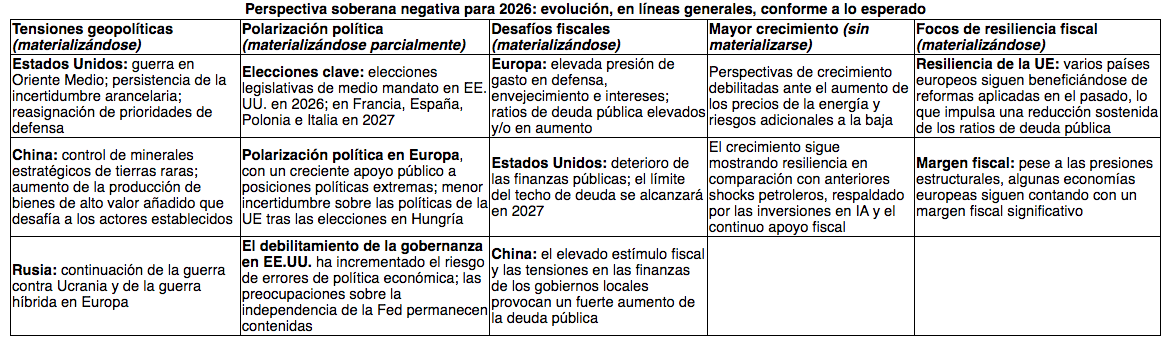
We expect the price of oil to average around $100 per barrel in 2026 and, from then on, to fall only gradually, remaining in 2027 above pre-conflict levels.
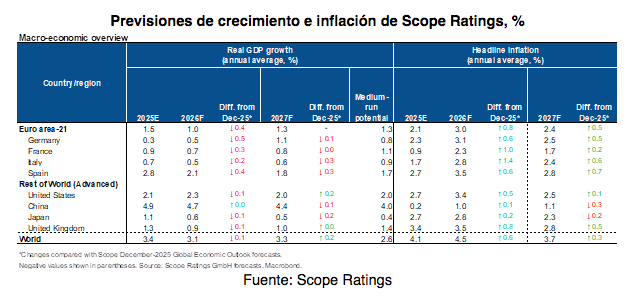
Global GDP will grow by 3.1% in 2026, just 0.1 percentage points below our December 2025 projections, before recovering slightly to 3.3% in 2027. However, the impact will be uneven across countries: the eurozone and Asian economies will bear the brunt of the adjustment, whilst US growth will remain around 2% in 2026–2027, supported by investment linked to artificial intelligence and significant fiscal stimulus.
Among the major eurozone economies, we have significantly revised downwards our growth forecast for Germany in 2026, to 0.5% from 1.0%, and expect the economy to rebound to 1.1% in 2027. This highlights the country’s vulnerability to the energy crisis, exacerbated by structural challenges linked to trade and manufacturing.
We have also revised our inflation forecasts upwards, particularly for 2026, especially in economies most dependent on fossil fuels or where electricity prices are more sensitive to gas prices.
Rising energy prices are not the only factor. We also assume that only a limited number of governments will intervene with price control measures, whilst broader fiscal support will be much more moderate than the packages rolled out following the start of the war in Ukraine.
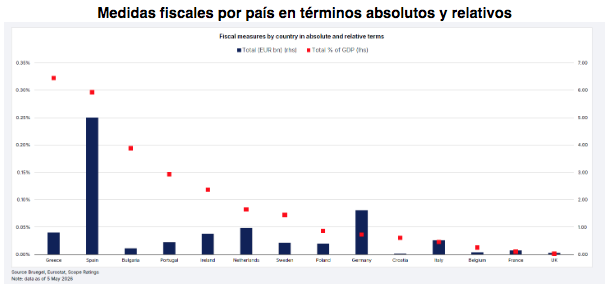
Governments are offering limited support to cushion the impact of the energy crisis
So far, only a small fraction of what was set aside during the previous energy crisis has been allocated. In total, €11 billion compared to €650 billion (between September 2021 and June 2023).
On average, our inflation forecasts are now between 0.6 and 0.8 percentage points higher this year. Among the major economies in the euro area, Spain and Germany will be the hardest hit by inflationary pressures, with inflation forecast at 3.5% and 3.1%, respectively, in 2026, before moderating to 2.4% and 2.8% in 2027. France, by contrast, is likely to experience more subdued inflation, at 2.3% in 2026 and 1.7% in 2027, partly reflecting the high share of nuclear-generated electricity.
Given the considerable current uncertainty, we have also developed a stress scenario based on the assumption that oil prices remain high throughout 2027 due to persistent disruptions to shipping through the Strait of Hormuz.
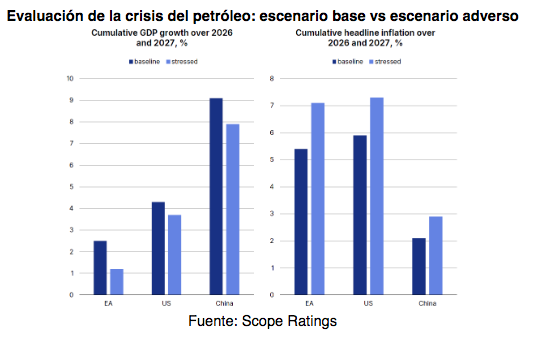
In this scenario, the eurozone and China would once again be more vulnerable than the United States due to their greater dependence on energy imports. In cumulative terms for 2026–2027, GDP in the euro area and China would be 1.3 and 1.2 percentage points lower, respectively, than in the baseline scenario.
By contrast, the United States would show greater resilience, although it would also be negatively affected, with cumulative growth 0.6 percentage points lower than in the baseline scenario. In the adverse scenario, inflation would rise by 0.8 percentage points above the baseline scenario in China, reflecting persistent deflationary pressures, whilst in the euro area and the United States it would be 1.7 and 1.4 percentage points higher, respectively.


