Search Results for ten lost months

US jobs

The US Labor Market In The Corona Crisis vs 2008’s Great Recession

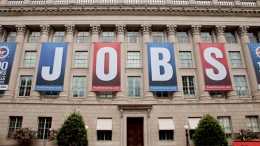
Agnieszka Gehringer ( Flossbach Von Storch Research Institute) | The labor market consequences of the corona crisis have been unprecedented. Roughly 21,4 million jobs have been destroyed within only two months, almost erasing the 22,4 million jobs created after the Great Recession of 2008/09. By comparison, during the Great Recession 8,7 million jobs were destroyed within the 25 months between February 2008 and February 2010
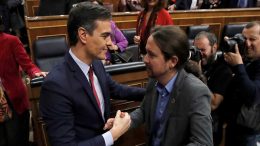

The agreement on the minimum wage and the relative success of the trip to Catalonia encourages the new government

Galapagar*? … We Have A Problem

A.J.A. | It is a common misunderstanding, typical of young people, to think that the greatness of democracy lies in the fact that we can choose who governs us. No. Its greatness lies in the fact that it gives us the chance to boot out the incompetent Government that has governed us for the last four years. Be it a PP Government, be it a PSOE Government. That’s what people in Venezuela, Cuba, or in China can’t do.


UE coronavirus

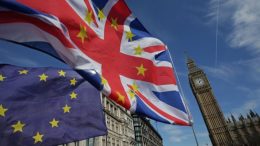
At Different Speeds In Europe On CoronaVirus: Each One Has To Shoulder Their Own Burden

José Ramón Díez Guijarro (Bankia Estudios) | Extraordinary measures have allowed financial markets to stabilize during the week. With one exception, as it seems that the concept of urgency is different in Europe from that in the rest of the world. The European summit on the coronavirus ended with the decision to take two weeks to analyse proposals. Even in a situation like the present one, northern European countries are not prepared to mutualise risks. We will see if all this does not end up affecting the waterline of the European project.


newyork coronavirus 1

COVID-19: Will We Learn the Lessons?

Daniel Wagner | The West can learn a lot from the response of the governments of China, Singapore and South Korea, which clamped down, instructed their populations to stay at home and ensured that they did so. These governments did not panic or overreact; they simply did not under-react, as America and much of the West have done.


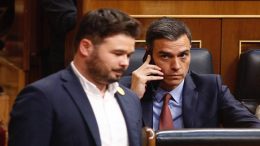
Pedro Sánchez falls short of majority but will likely prevail tuesday

Spain: deceleration slowing down

Joan Tapia | The latest data indicate that the economic slowdown in Spain is showing some signs of reversing. That is, the slowdown is slowing down and that the economic situation in the coming months may be somewhat better than expected by some of the most pessimistic analysts. The misfortune is that this slight recovery of economic optimism has no correspondence in the political field, as the result of the 10-N elections and the subsequent movements of the parties indicate a very difficult governance.


spain congress

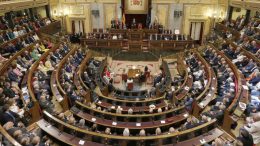
Spain election: a sad and brief socialist victory

Juan Luis Manfredi (The Conversation) | The elections in Spain do not represent a second round nor a referendum or a presidential test. They cannot be compared to those of last April 28 despite the strategic over-action of political leaders. The socialist party had too much confidence on their advisors, the CIS public research institute poll and a social media-based campaign. 


104415914 GettyImages 670697906.1910x1000

ECB: tricky “strategy review” ahead

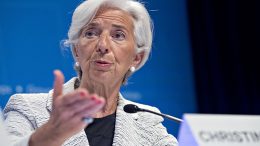
Gilles Moëc (AXA Group) | We knew that the European Central Bank (ECB) was very divided in the run-up to the Governing Council meeting on September 12th, but two weeks later the fallout of what must have been a very fractious discussion is still very much here.


apple 1

When Apple seems more Chinese than American

Ofelia Marín-Lozano (Capital Sicav) | Political events have always had a certain influence in the behaviour of financial markets in the short term. Although what dominates in the long term are company results, any uncertainty coming from the world of politics has a cost, and currently there are many uncertainties weighing on the minds of investors.