

ECB

No Picture

Daniele Nouy: “We are ready to assume EU banking supervision”

BRUSSELS | By Alexandre Mato | The head of the ECB’s financial watchdog, Daniele Nouy, asserted her belief before EU legislators that entities will arise stronger in the near future. Moreover, on the eve of the Single Supervisory Mechanism taking control of financial supervision, the French official expects that most of the capital shortfall will be filled by an influx of fresh private money.

No Picture

And the ECB grabbed the mike

LONDON | Barclays analysts | Central banks will remain in the spotlight this week, with banks in Europe, UK, Australia, Malaysia, Thailand, Poland and the Czech Republic all set to deliver policy decisions. Of these only the NBP in Poland is likely to move, cutting policy rates by 25bp, in our view. However, most attention will be on the ECB for any hints of future QE, as economic data remain a challenge.


No Picture

ECB monetary policy places the EZ in an “increasing depression”

SAO PAOLO | By Marcus Nunes via Historinhas | Before it was Peter Coy with John Maynard Keynes Is the Economist the World Needs Now. Now it´s Anatole Kaletsky with The takeaway from six years of economic troubles? Keynes was right: The main lesson is that government decisions on taxes and public spending have turned out to be more important as drivers of economic activity than the monetary experiments with zero interest rates and quantitative easing that have dominated media and market attention.


stress test recursoTC

Do the ECB’s stress tests results change anything for EU banks?

MADRID | The Corner | The ECB’s comprehensive assessment showed positive results, yet not sufficiently positive for banks to increase risk and lending. So no, stress tests were not a clearing event and we are not entering a new era as some have said. Which makes it harder for policy makers to rely on bankers for economic growth. This scenario “will likely add to pressures for greater structural reform in Europe,” analysts at Barclays believe.


No Picture

EZ private loans: Depressed… yet stabilising

MADRID | The Corner | Loans to the private sector in the euro area fell by 1.2% year-on-year in September, according to the ECB’s data,  a slower rate than the 1.5% decline seen in August.  Are there reasons for optimism? It depends.  “After seven years of crisis, bank loans continue to fall. Those to the private sector have fallen by -0.6% yoy. Loans to non-financial businesses dropped by -1.8%, with Spain and Ireland especially weak,” Barclay’s Alberto Vigil pointed out. “Now if you want  to look through a different glass (loans’ reduction is slowing down), the opposite interpretation is also perfectly correct,” he added.


No Picture

Central Banks that make the same mistake are ‘rewarded’ with similar outcomes

SAO PAULO | By Marcus Nunes via Historinhas | While the Riksbank can focus exclusively on Sweden, the ECB has a more complicated task, having to ‘oversee’ a bunch of countries. Both central banks have an exclusive mandate: “Price stability”. While in Sweden that is understood as 2% inflation, in the EZ it is something slightly lower. Nevertheless, the two ‘countries’ central banks acted in tandem, tightening as a reaction to higher than target inflation due to oil price shocks.


stress tests1

Stress tests: Inconclusive EU banking probe

MADRID | By JP Marín Arrese | Most banks have comfortably overcome the stiff hurdles raised by the EU-wide stress test unveiled on Sunday. A reassuring outcome was widely expected, as Europe cannot afford to destabilise its financial sector when economic performance looks so grim. Yet, securing a fair result fails to endorse banking resilience should the underlying assumptions underestimate key risks. This shortcoming was evident from the start. For, the stress test builds on potential shocks failing to reflect key vulnerabilities, thus hampering its ability for properly assessing financial stability in rough times.  


No Picture

Spanish banks pass most stringent stress tests to date with no capital shortfalls

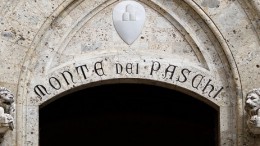
MADRID | The Corner | The ECB did not find any capital shortfall in the Spanish banks, which all passed the highly awaited central bank’s stress tests. Results made public on Sunday reveal that 25 European lenders failed while the other 105 succeeded. Among the big fish only the Italian Monte dei Paschi, the world’s oldest, appears in the failure list. Those 25 European entities will have to face €24.6 billion capital shortfall, but considering 13 of them have already issued part ot these capital needs, they will only reach €9 billion.


No Picture

ECB fuels up optimism with covered bond purchases’ largesse

MADRID | The Corner | As all market eyes are set on Sunday’s stress tests results (which will be released 12 pm CET) and the  FOMC meeting next Wednesday, the last PMI data are offering some hope, mostly in Germany. The rumors about the ECB having purchased at least 800 million euros ($1 billion) of covered bonds in the first four days of program (as opposed to €1.5bn in the first month of the last covered bond program in November 2011) fueled optimism.


No Picture

ECB’s eventual purchase of corporate bonds: Inflating the bubble?

MADRID | By Julia Pastor | Even though the ECB dismissed the rumours about its intentions of buying corporate bonds, all market players are asking for stronger actions by the central bank. Such measure could become the ace up the ECB’s sleeve for its December meeting. Given the liquidity surplus in the companies’ debt market (due to the “low interest rates, not to cheap credit,” as experts at Renta4 pointed out), including this sort of assets could add to such surplus.