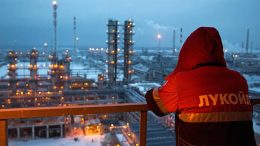
Russia: Oil Is Cheap, But Peace Is Dear
Russia’s economy of 140 million people has managed to survive inflation (2.5%) and the fall in the rouble, although it needs to make the energy miracle last one decade more to offset sanctions.

Russia’s economy of 140 million people has managed to survive inflation (2.5%) and the fall in the rouble, although it needs to make the energy miracle last one decade more to offset sanctions.
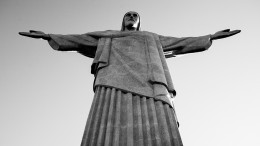
Manuela Andreoni | As Brazil braces for its most important election in decades, hopes of stabilization are dwindling. The country is slowly stepping out of an almost three year-long recession, but uncertainty over what will happen at the ballot boxes later on this year is pushing debate on how to resume growth into a distant future.

Ever since the nationalists in Catalonia flared a low key rebellion against Madrid, the region seems close to the world depicted by Aldous Huxley. They are attempting to create a brand new life, erasing all Spanish vestiges from early childhood onwards.
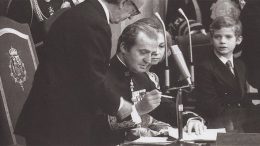
Whether the secessionists lead the new Catalonia’s government or not after December 21 elections, the weakened Spanish government will be inevitably forced to go through a negotiated constitutional reform which, amongst other objectives, will aim to satisfy the unrepentant Catalan nationalism.

Ciudadanos (37 seats) was the party which won the most votes in Catalonia but will not be able to form a government. The independent block still has control of the Parlament with 70 seats versus the 57 won by the constitutionalists and the 68 needed for an absolute majority. Ciudadanos’ victory is significant, a difficult milestone to achieve given the current electoral law. But the secessionists were able to hold on to their absolute majority in the regional parliament.

On the day when Catalonia votes for a new government, the region’s citizens are very confused about the reasons and where the blame lies for the situation they find themselves in.
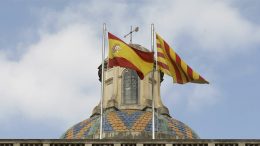
For the time being, Spain’s economy is maintaining its cruising speed and GDP will grow 3.1% this year, according to estimates. But Catalonia’s progress is visibly slowing, with figures continually being downgraded.
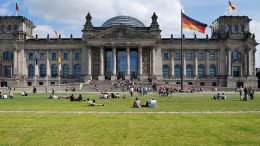
Europe has been seriously hit by the outcome of the German elections. And it’s difficult for it not to suffer the consequences of being led by Germany. What is in doubt is whether in the next crisis, which could be fuelled by any of the underlying threats (Russia, immigrants, separatism etc) there will be sufficient common resources to deal with them.
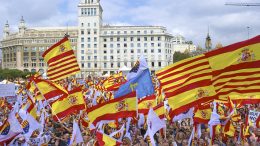
The outcome of the Catalonia elections on December 21 will not easily bring a quick solution to the problem in the region. But both in the case of the independence movement losing the majority of seats (it no longer had the majority of votes and it’s almost impossible for it to obtain) or there being a division over the future, the path towards normalisation will have started.
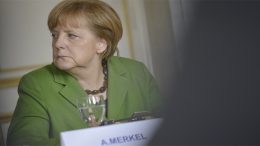
The collapse of Germany’s coalition talks should not affect the economy or financial markets given that market overcame the shock very quicky on Monday and all the European indexes as well as the US closed upwards. It was also noticeable that was precisely the German DAX the one that increased stronger. However, this political uncertainty in Germany is bad news for Europe as four different scenarios are going forward.