
France

France

Despite fiscal reforms, France´s 2019 deficit will rise again to 3.1% of GDP

Scope Ratings | France has been host of the G7. While its neighbour debates foreign policy, Emmanuel Macron continues to pursue his fiscal reforms, without losing sight of the size of France´s budget deficit (rising towards 3.1% of GDP this year and exceeding the target for 2020) which has caused concerns about the sustainability of the country´s debt.


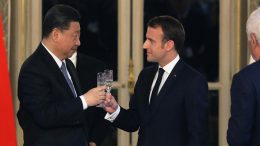
xi jinping macron ok

Some takeaways from Xi Jinping’s visit to France and Italy and ideas for the EU-China summit

Alicia Garcia Herrero (Natixis/Bruegel) | Only a few days before Li Keqiang’s official visit to Brussels for the EU-China summit on April 2019, Xi Jinping has conducted his second trip to Southern Europe in only five months. Such a keen interest in Southern Europe is hard to understand, especially if one considers that Chinese high level officials are busy negotiating with the US to reach a deal to halt the trade war.


eiffel pisa

Italy’s Response To French Spending May Hurt Euro

Christmas came early this year in France as President Emmanuel Macron handed out gifts to his constituents like an end of the year bonus and a €100 increase of the minimum wage, explicitly not paid by employers. However, the European Union may not join in the celebrative Christmas conga as this spending spree will send the French budget deficit far north of what European budget rules allow.


France

Budget Balance In France And The ‘Funding Pot’

Robust economic growth in France in 2017, coming in at 2%, helps ease the restrictions on public finances. The other point worth noting is that the government must use surplus income, or what is known in France as the ‘funding pot’, to rebalance public finance rather than embark on fresh spending measures if it really wants to prove its commitment on public finances.


France needs to protect workers not jobs

“We Need To Protect Workers, Not Jobs”

Emmanuelle Auriol, member of the board of the European Economic Association at the University of Toulouse, is well-known in France for her polemic proposals. She believes, and this is very important for France, for its identity and the social consensus we have established, “that we need to protect the workers, not the jobs. Because if we try to protect the jobs, prohibit lay-offs, what happens is that there is more unemployment in the end.”