
Greek debt restructuring unlikely before year-end
The IMF is insisting on the need to evaluate a debt relief for Greece. Will it happen?

The IMF is insisting on the need to evaluate a debt relief for Greece. Will it happen?

BARCELONA | July 17, 2015 | By Joan Tapia | The lowering of the income tax while taking money from the country’s pension funds can only be justified as a way to inject optimism before the election.

The Corner | July 9, 2015 | Updating its World Economic Outlook, the International Monetary Fund cut its world growth forecast (3.3 %from 3.5%) in 2015, downplayed the Greek drama and said it expects Spain to grow more than the US.

The Corner | June 8, 2015 | Spanish growth, well above the euro area average, has surprised the IMF on the upside (GDP growth is seen at 3.1% in 2015 and 2.5% in 2016). And reforms have boosted confidence, business investment and consumption. The main headwind for Mariano Rajoy’s government is now a hampering unemployment rate of almost 23.8%, the Washington-based institution says.
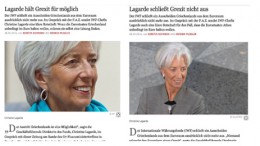
MADRID | May 29, 2015 | By Ana Fuentes | German bund futures spiked higher on Friday after traders cited comments by IMF’s Christine Lagarde to the Frankfurter Allgemeine Zeitung that a Greek exit from the euro zone was a possibility. As Ms Lagarde’s words heated the debate worldwide, the IMF insisted the German paper mistranslated her as too hawkish on Grexit. The print version of the interview published today is slightly different (see screenshots above).

May 25, 2015 | By Benjamin Cole via Marcus Nunes‘Historinhas | The International Monetary Fund on May 22 badgered the Bank of Japan to adopt a more aggressive growth stance, even though the island nation posted Q1 real GDP growth of 2.4%, and an annual inflation rate of 2.3%—along with an unemployment rate of 3.4%.
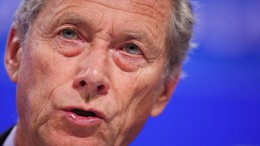
PARIS | April 20, 2015 | By Francesco Saraceno | Recently I commented on the intriguing box in which the IMF staff challenges one of the tenets of the Washington consensus, the link between labour market reform and economic performance. But the IMF is not new to these reassessments. In fact over the past three years research coming from the fund has increasingly challenged the orthodoxy that still shapes European policy making.
The Corner | April 18, 2015 | The IMF raised growth expectations for all the major economies in the Eurozone – especially Spain to 2.5% in 2015 and 2% in 2016- and for Japan. The new figures, the sixth improved forecast in a row– are more aligned with Madrid expectations (2%, although the Minister of Economy even forecasts a 3% growth). Low oil prices, the euro depreciation and the ECB’s monthly liquidity shots are the three aces of the Spanish government, who is hoping to retain the power in the next general election despite the popularity of new parties.
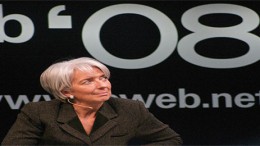
PARIS | April 15, 2015 | By Francesco Saraceno | I am ready to bet that the latest IMF World Economic Outlook, that was presented [on Tuesday] in Washington, will make a certain buzz for a box. It is box 3.5, at page 36 of chapter 3, which has been available on the website for a few days now. In that box, the IMF staff presents evidence on the relationship between structural reforms and total factor productivity, the proxy for long term growth and competitiveness. (Interestingly enough people at the IMF tend to put their most controversial findings in boxes, as if they wanted to bind them).
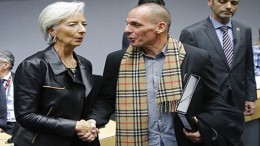
MADRID | April 10, 2015 | By Ana Fuentes | Investors breathed a sigh of relief on Thursday when Greece met its IMF loan commitment of €460 million euro ($485 million). Markets are predicting that Athens and its creditors will reach an agreement, which would put an end to the standoff which has developed since the Syriza government was elected earlier this year. Still, creditors are using the leverage provided by the country’s current cash shortage to force Athens to make major reforms. Meanwhile they are pocketing huge interest from the outstanding loans.