In Europe

demand

Mr Sinn on EMU Core Countries’ Inflation

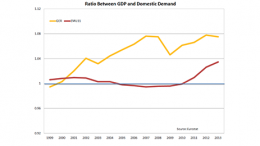
By Franceso Saraceno | Where [President of CESifo Group Hans-Werner Sinn and I] disagree is on how to trigger the demand-driven boom. Mr Sinn expects this to happen thanks to market mechanisms, just because of the reversal of capital flows that the crisis triggered. He argues that the capital which foolishly left Germany to be invested in peripheral countries, being repatriated would trigger an investment and property boom in Germany, that would reduce German’s current account surplus. This and this alone would be needed. Not a policy of wage increases, useless, nor a fiscal expansion even more useless. Problem is, the data speak against Mr Sinn’s belief. Since the crisis hit, capital massively left peripheral countries, and yet this did not fuel domestic demand in Germany.



Fondos Inversion Recurso3TC

Foreign money comes back to Spain

MADRID | By Fernando Barciela | Last year, according to the World Investment Report 2014 by the UNCTAD, Spain received more foreign direct investment (FDI) than countries as the United Kingdom, Germany or Holland: up to $39,167 billion (52.4% more than in 2012). Who are boosting the investment activity? The so-called vulture funds are the ones that first noticed Spain’s “possibilities”: Lone Star, Cerberus, Burlington, GreenOak, Colony, Fortress or H.I.G –most of them North Americans.


germany factory workers

Germany 2015: Some happy news, yet not enough to revive eurozone’s growth

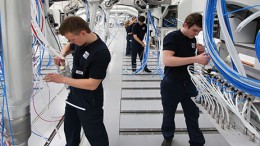
BERLIN | By Alberto LozanoThe German economy has gone from growing at 0.8% q-o-q earlier this year to being on the verge of recession as a result of the geopolitical situation, especially after the sanctions against Russia. Only now in December the country seems to recover its confidence. However, an expected GDP growth of around 1% in 2015 continues to be insufficient to spur growth in the Eurozone.


EmpresaTrabajoTemporal recursoTC

German wages rise should spur demand

MADRID | The Corner | Germany seems finally willing to boost its domestic demand. Real wages rose by 1.8% in 3Q (3T2014) compared to the same period from 2013, its largest rise in over three years, according to official data. An increase in wages along with penalized savings should result in more consumption


grecia syrizaTC

Eurozone’s plight

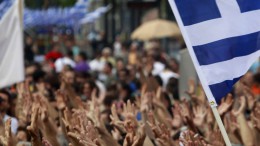
MADRID | By JP Marín ArreseOnce again, Greece has ignited the flame of instability in the Eurozone. The prospect of early elections coupled with the left-wing party´s scores in the polls has resulted in severe shock-waves hitting other South-Med countries. The promised debt default by the better placed candidate in this race stands as a formidable threat to Europe. What happens in this relatively small country is bound to hit all of us. Confidence in sovereigns will dramatically fall while financials will also bear the brunt. 


interrogacion recurso TC

Greece: The one question Syriza needs to answer

ATHENS | By Yiannis Mouzakis via  MacroPolisWith the coalition in Greece getting only 160 votes for its presidential candidate in the first ballot, falling short even of the most conservative estimate, based on the currently available information it seems that the number of deputies that will vote in favour in the third round on December 29th will not reach the minimum 180 required.


AngelaMerkel HorschTC

Is austerity losing the battle in Europe?

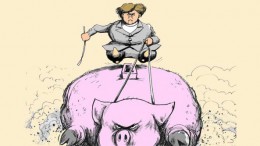
BERLIN | By Alberto Lozano | The different measures implemented in Europe in order to boost growth through increased monetary action, investment and structural reforms have replaced austerity as the new dominant dogma. While Angela Merkel is adapting to the new situation, Bundesbank president Jens Weidmann disagrees with more budget flexibility and a possible QE by the ECB in 2015. (Cartoon: Horsch / La Repubblica).


rublo recurso4TC

Russia represents 1.1% of Spanish exports

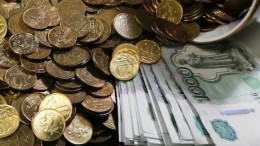
MADRID | The Corner | The Russian market represents a low proportion of the Eurozone’s goods exports: below 3% for the major economies. In the case of Spain, the percentage is just 1.1%. According to experts at Afi, a decrease in the amount of Russian tourists arriving in Spain could have an impact on the Spanish economy. After all, its current contribution to the sector is just (2.4%), but before last summer, Russian tourism was a spur to Spanish tourism. 


grecia tsipras1TC

Greece: Where did it all go wrong?

ATHENS | By Nick Malkoutzis via MacroPolisWhen Greece returned to international bond markets in April this year after a four-year exile, it was trumpeted by Prime Minister Antonis Samaras as another step towards the crisis exit door. “Confidence in our country was confirmed by the most objective judge – the markets,” he said after investors snapped up three billion euros of five-year bonds with a coupon of 4.75 percent. Exactly seven months later, though, the yield on those bonds shot up to almost 10 percent. Suddenly, the markets do not seem so confident. So, what went wrong? 


grecia tsiprasTC

Greek elections: Syriza’s date with history

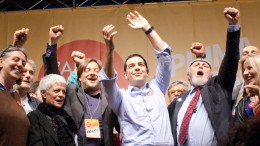
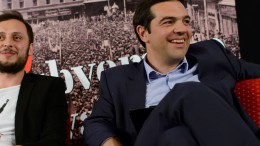
ATHENS | By Nick Malkoutzis via MacroPolisSyriza leader Alexis Tsipras is following a well-trodden route by trying to force early elections over the presidential ballot. Several others before him have tried to exploit the loophole in the Greek constitution which means that snap polls have to be held if 180 MPs cannot be found to back a presidential candidate. The most recent opposition leader to follow this tactic was PASOK’s George Papandreou in 2009.