In Europe

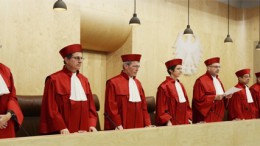
German court

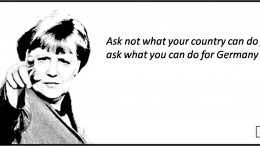
ECB’s OMT: The trick in German Constitutional Court’s sentence

MADRID | By Luis Arroyo | Germany set off a time bomb against the euro by transferring from the country’s constitutional court to European Court of Justice the decision about “legality” of ECB’s Outright Monetary Transactions’ program. Some Spanish analysts appear to be pleased with the sentence, contrarily to common sense: it is good that German Court starts to agree the European Union’s. They say that recognising Europe’s jurisprudence assures Community law’s unity. God bless their innocence.

Electrical market

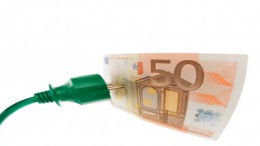
Electricity market in Spain: win-win rules for power companies

MADRID | By J.P. Marín Arrese | The Spanish government is thoroughly reshuffling the electricity market. Confronted with a ramping deficit between market prices and overall costs, transferred into automatic commitments to fill the gap, it is taking tough action to curb an unsustainable situation. The unwarranted imbalance is mainly due to an overgenerous policy, implemented by the former Executive, in fostering renewable energies. Fat subsidies, coupled with preferential access to the market, have propelled electricity generation costs. As demand slumped in the crisis, the share of highly expensive green energies markedly increased the toll.


No Picture

Royal Drama and Gürtel Case Stir Debate Over Corruption In Spain

MADRID | By Ana Fuentes and Julia Pastor | It’s been five years since the Gürtel case, the major corruption scandal that has rocked Spanish politics -187 people, 78 of them political figures and 61 businessmen targeted- . The same week, and for the first time in the country’s history, a direct member of the Royal family will testify before a judge on Saturday, over accusations of tax fraud and money laundering. Is Spain a more corrupt country than its neighbors or transparency is reigning at last? An interesting question as two major media moguls (El Mundo and La Vanguardia) known for speaking up have been relieved from their posts.


No Picture

Troika inquiry in Greece: talk to the organ grinder, not the monkey

ATHENS | Op-ed via The Agora | The European Parliament’s inquiry into the troika and its record in eurozone bailouts sounds like a welcome effort to hold Europe’s crisis managers to account. Unfortunately, the inquiry’s report is likely to miss the bigger picture, because of the European Parliament’s institutional navel-gazing and narrow focus on the troika – a team of civil servants – rather than its political masters.


No Picture

The Threats of Emerging Countries For the Euro

MADRID | By Luis Arroyo | The appreciation of the euro, in a deflationary context as the current one, may be the last push so as to cross the ECB’s red line and reach a Japanese style deflation. Macroeconomic variables don’t encourage optimism, especially because inflation in the euro zone is getting closer and closer to the ECB’s zero red line.


eurito

Credit deterioration in the euro zone hits rock bottom

MADRID | By Carlos Díaz Güell | Trend of credit fall in euro zone core countries as well as in peripheral ones has shifted direction thorought 2013: it moderated in Europe’s periphery while slowing down in central economies.The rate between credit and deposits has moved under 100% for the first time, which illustrates the euro zone strong deleveraging process.


Euro fears deflation

Losing patience with the ECB

MADRID | The Corner Team | Investors are most likely to hear the ECB repeat (again) how prepared it is to act and use all kind of unconventional devices on next Thursday meeting, after inflation in the euro zone fell to 0.7% in December, its lowest level since the common currency was born. “As fears of  deflation increases, the central bank cannot remain unable to act,” analysts say.


Greece's accounts

Greece: It’s not the distance; it’s the load you carry

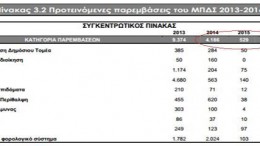
ATHENS | By Yiannis Mouzakis via Macropolis| It is beyond any doubt that what Greece has achieved fiscally over the last few years is phenomenal. A primary deficit that at the end of 2009 stood at 24.2 billion euros has been wiped out within just four years and has been turned into a small primary surplus, irrespective of any objections one might have about its size and how it was achieved.