In Europe

Young people want UK to stay in Europe

Young people ‘want UK to stay in Europe’

LONDON | By Nigel Morris at The Independent via Presseurop | A generation gap has opened up among Britons, with 41 per cent of 18-24 year olds saying they are firmly in favour of the UK’s EU membership or leaning towards support, compared to 32 per cent who are against, according to a new poll published in The Independent.


No Picture

Germany, the Same Ol’ Song

MADRID | By Luis Martí | In Germany, coalitions are frequent at all levels of government, with a degree of formalization and publicity which was minimum before (in the Adenauer Era), but which has shown an extensive “coalition contract” since 1969. The current contract, initialled on 27 November, has yet to be ratified –and it’s expected that the process will be brief where the CDU and the CSU are concerned, but not so much in the case of the SPD, which must be subject to a vote of approval by its affiliates.


No Picture

Europe: Clouds are slowly lifting

LONDON | By Barclays analysts | We expect Europe to experience a long period of moderate economic growth, coupled with very low inflation: for the EU28, GDP should grow 1.5% in 2014 and accelerate to 1.7% in 2015, while inflation should bottom at 1.2% in 2014 before edging up slightly, to 1.4%, in 2015.


No Picture

When Catalonia Becomes a Risk in the Horizon

MADRID | By Fernando G. Urbaneja | Catalonia government has put a date (November 9, 2014) to a secessionist referendum. The independence movement has overcome another obstacle to approach its final goal. Those who argue they are tactical moves to modify the financial model are running out of arguments, for this is something much more important that affects Spain. Its consequences are unpredictable, and catastrophic from any point of view. [Video: Euronews]


eurozone unemployment

Eurozone’s Job Gains Show A Turning Point

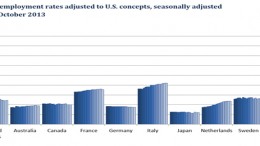
NEW YORK | By Ana Fuentes | While the unemployment rate increased in Japan and the U.S. in October, it declined in the eurozone for the first time in nearly three years, the Conference Board International Labor Comparisons (ILC) pointed out on Thursday. The sign that the Old Continent might be reaching a turning point at last, reckoned an expert of the organization based in New York. But not that fast- isn’t youth unemployment still at 24.4 per cent?


No Picture

Cyprus in 2014: Looking ahead

By Alexander Apostolides via The Agora | Cyprus has the habit of grabbing international attention in a global way, only to then be marginalised as a footnote when the immediate crisis seems to have abated. This has been historically true in issues of communal violence and the Annan plan, in what we Cypriots call “the original Cyprus problem”. Sadly for Cyprus, this is also seems to hold true in regards to its financial crisis.


ECB Mr Coeure does not have a heart

ECB: Mr. Coeure doesn´t have a “heart”

SAO PAOLO | By Marcus Nunes | ECB Executive Board member Benoit Coeuret told a journalist club on Monday night that the European Central Bank was ready to act, but that the euro zone was not edging towards a dangerous fall in prices.


Posted workers OK

Posted workers: stricter rules will hurt Europe

WARSAW | By L. Guza at Dziennick Gazeta Prawna via Presseurop | EU labour ministers are meeting today to agree on amendments to the 1996 Posted Workers Directive, but the changes demanded by some member states to fight social dumping from countries including Poland will hamstring the free flow of workers and benefit middlemen.


Greece Debt 2013

Debt relief or debt restructuring for Greece?

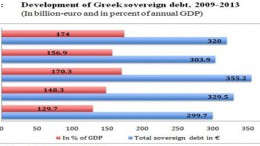
By Jens Bastian at The Agora | The two economic adjustment programmes for Greece from 2010 and 2012 as well as the sovereign debt restructuring from April 2012 and the debt buyback initiative in December of the same year have had a significant impact on the debt profile of Greece as a sovereign debtor. Greece’s creditor structure in 2013 compared to the point of departure in 2010 hardly bears any resemblance.

adjustment programmes for Greece from 2010 and 2012 as well as the sovereign debt restructuring from April 2012 and the debt buyback initiative in December of the same year have had a significant impact on the debt profile of Greece as a sovereign debtor. Greece’s creditor structure in 2013 compared to the point of departure in 2010 hardly bears any resemblance. – See more at: http://www.macropolis.gr/?i=portal.en.the-agora.672&itemId=672#sthash.BZtuYz92.dpuf
The two economic adjustment programmes for Greece from 2010 and 2012 as well as the sovereign debt restructuring from April 2012 and the debt buyback initiative in December of the same year have had a significant impact on the debt profile of Greece as a sovereign debtor. Greece’s creditor structure in 2013 compared to the point of departure in 2010 hardly bears any resemblance. – See more at: http://www.macropolis.gr/?i=portal.en.the-agora.672&itemId=672#sthash.BZtuYz92.dpuf

The two economic adjustment programmes for Greece from 2010 and 2012 as well as the sovereign debt restructuring from April 2012 and the debt buyback initiative in December of the same year have had a significant impact on the debt profile of Greece as a sovereign debtor. Greece’s creditor structure in 2013 compared to the point of departure in 2010 hardly bears any resemblance.

– See more at: http://www.macropolis.gr/?i=portal.en.the-agora.672&itemId=672#sthash.BZtuYz92.dpuf


The two economic adjustment programmes for Greece from 2010 and 2012 as well as the sovereign debt restructuring from April 2012 and the debt buyback initiative in December of the same year have had a significant impact on the debt profile of Greece as a sovereign debtor. Greece’s creditor structure in 2013 compared to the point of departure in 2010 hardly bears any resemblance.

– See more at: http://www.macropolis.gr/?i=portal.en.the-agora.672&itemId=672#sthash.BZtuYz92.dpuf