Spanish Politics
Spain Has A government, Now What?
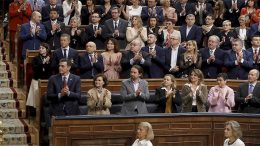
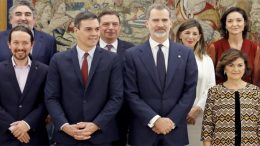
Rubén Segura-Cayuela (BofA Global Research) | Spain finally has a government, although with a razor-thin majority. This will be a coalition government comprised of the centre-left PSOE and the far-left Podemos, with the external support of several smaller parties, including Basque nationalists, and the implicit support (abstention in the government formation vote) of the secessionist ERC. The “easy”part of the job is done. The very challenging one, policy-making with thin parliamentary numbers, starts now.
The New Spanish Government Quells Investors’ Worries
The coalition between the Socialist Party and the extreme left Podemos raised serious doubts on its ability to run the economy. Its agreed platform trumpeted a massive increase in social expenditure, coupled with tax rises plus extensive public regulation in many key markets, ranging from power supply to housing rentals. No wonder it aims now to pedal back to check the foreseeable loss of confidence.
Pedro Sánchez Falls Short of Majority, But Will Likely Prevail Tuesday
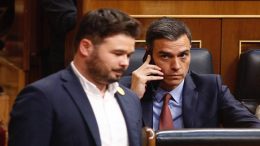
Atlantic Sentinel | Left-wing separatists would allow the social democrat to become prime minister a second time. Spanish Socialist Party leader Pedro Sánchez fell short of a absolute majority in Congress on Sunday to become prime minister a second time. However, left-wing separatists from the Basque Country and Catalonia have agreed to abstain from a second vote on Tuesday, which should allow Sánchez to scrape by with a majority of one.
Spain: Political instability at home continues, undermining influence abroad
Shaun Riordan | Pedro Sánchez has failed to secure election as Spain´s Prime Minister in the second investiture vote in the Spanish parliament today. He needed only a simple majority. But the break down in negotiations with Podemos, and their decision to abstain, left Sanchez´ socialist party (PSOE) in a minority. The problems between the two parties seem to have centred not on policy but on the distribution of ministerial portfolios in a coalition government. Sanchez conceded that Podemos could hold ministerial positions, but the far left party complained that the portfolios he offered lacked real substance.
Elections in Spain: Awaiting the next government with the economy far from the campaign
Joan Tapia (Barcelona) | As I write this article, three polls have been published – in three Spanish newspapers ABC, El Periodico de Catalunya and Confidencial – which practically agree. If there are no changes in the twenty days that remain before the elections, PSOE will be the largest party with more than 130 seats, far distant from the PP which will remain on 80-90 seats.
Did We Really Need The Economist To Call Spain A Full Democracy ?
The Economist Intelligence Unit has published the 11th edition of its ranking on the global state of democracy. Of 165 countries in the world, Spain is ranked 19th for the quality of its democracy. It is not bad given the political instability Spain is experiencing. Nor the open breach in confidence following the crisis between citizens and politicians and citizens and economic powers. Nor taking into account Spaniard’ s tendency to self-flagellation.
Far-Right Populists Break Through In Spanish Politics Too
The elections in Andalucia have revolutionised Spanish politics with the the worst ever results for the socialist party (PSOE), which has been governing this autonomous community without interruption since 1978, and the entrance of the far right, in the form of the new party Vox, in the Spanish political map.
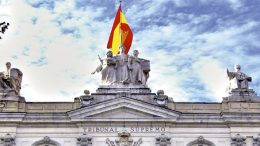
When The Supreme Court Adds To The Lack Of Confidence In Spanish Politics
Spain has gone almost three years without a government with a parliamentary majority. The worst part is that there is nothing on the horizon that would guarantee more stability. To this already very complicated panorama must be added that the Supreme Court has been incapable of arbitrating a solution acceptable for Spanish society about who should pay mortgage stamp duty.
Spanish Political Scene: A New Mould After 40 Years Of Democracy
Following the series of articles by William Chislett which The Corner is going to publish on the 40th anniversary if the Spanish Constitution, today we are dedicating to know the intricacies of Spain’s political life during these years of democracy. Between 1982-2015, this was dominated by two parties, the conservative Popular Party (PP) and the Socialists. They alternated in power until two upstart parties, centrist Ciudadanos (Citizens) and the populist-left Podemos (We Can) won a significant number of seats in parliament.