
Draghi Is Nervous That Dollar’s Fall Could Affect Stimulus Withdrawal
Draghi is nervous because the dollar has begun to fall, messing up his plan to withdraw stimulus from an economy which is increasingly more dynamic.

Draghi is nervous because the dollar has begun to fall, messing up his plan to withdraw stimulus from an economy which is increasingly more dynamic.

Oil continues to flirt with USD 70 per barrel and it remains to be seen if prices are able to lastingly settle above this much-watched level with the latest up move. Global growth optimism, the bullish market mood and technical momentum still provide robust support.

Russia’s economy of 140 million people has managed to survive inflation (2.5%) and the fall in the rouble, although it needs to make the energy miracle last one decade more to offset sanctions.
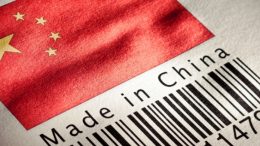
Yang Ge via Caixin | The views from inside and outside China sometimes seem worlds apart. On the one hand there are foreigners outside China, who are increasingly anxious about the nation’s potential to create a new global financial crisis. Then there are people on the inside, who sometimes seem oblivious to the huge amount of attention the world is paying them and are more focused on how to earn the next big buck from their massive market of 1.3 billion consumers.
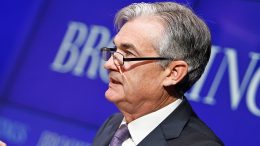
Benjamin Cole | The US Senate Banking Committee Jan. 17 voted thumb’s up on Jerome Powell, President Trump’s appointment to the Chair of the Federal Reserve. Barring calamity, Powell should take over in February.

Manuela Andreoni | As Brazil braces for its most important election in decades, hopes of stabilization are dwindling. The country is slowly stepping out of an almost three year-long recession, but uncertainty over what will happen at the ballot boxes later on this year is pushing debate on how to resume growth into a distant future.
What was a surprise in the IMF’s updated growth estimates was the correction made to the growth forecast for Spain this year (-0.1 pp to 2.4%) given “the impact of greater political uncertainty on confidence and demand.”

It seems we have a consensus: Europe is overbanked. Zombie banks need to be allowed to fail and the process of mergers needs to be strengthened, particularly cross-border. But the US model is more of an exception than the rule and there are countries, like Spain, where the consolidation could start to be excessive.

Despite bitcoin has plunged below $10,000, almost halving in value from its peak price near $20,000 in late December, it is undeniable that alternative currencies are gaining attention against fiat currencies. However, as reported by Flossbach von Storch they all lack one characteristic absolutely necessary for money to have value over the long term: its existence as a commodity that has intrinsic value or can be changed into one that does.

After nearly a decade of easy money, the financial markets and the economy have not just become addicted to debt, but also indifferent to the continued growth in global debt.