World economy

Two things to watch out for at COP25 (and why climate stocks could benefit)

Two Things To Watch Out For At COP25 (And Why Climate Stocks Could Benefit)

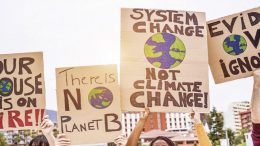
The 25th United Nations Conference on Climate Change 2019 COP25 begins today in Madrid. We expect from COP25 two more encouraging developments: Firstly, a key issue left unadressed in the preceding Conference of Parties – COP24 in Katowice, Poland: the use of financial markets as mechanisms for fighting climate change. Secondly, a range of updates to countries’ individual targets, known as nationally determined contributions (NDCs).


How Libra can reduce the regulatory burden by delegating the issuance of stablecoins to qualified partners

How Libra Can Reduce The Regulatory Burden By Delegating The Issuance Of StableCoins To Qualified Partners

Yoni Assia, Johannes Rude Jensen and Omri Ross (E-Toro) |  With direct access to 2.7 billion users, many of whom do not have access to conventional financial services, the Libra project presents a unique opportunity for innovation in the financial services. Nevertheless, we believe the launch strategy pursued by the Libra Foundation neglects a vital implication of the technology: Decentralization.


Is it the Fed that has changed... or the world around it?

Is It The Fed That Has Changed… Or The World Around It?

CaixaBank Research | The Fed has cut interest rates in 2019 for the first time in 11 years. However, it has barely lowered its growth outlook for the US and has justified the cut with the weakness of inflation and the persistence of risks. Is it possible that the Fed has changed its reaction function? The results of the analysis in this article suggest so.


future

10 Themes for the Next 10 Years

BofAML | We enter the next decade with interest rates at 5,000-year lows, the largest asset bubble in history, a planet that is heating up, and a deflationary profile of debt, disruption and demographics. We will end it with nearly 1bn people added to the world, a rapidly ageing population, up to 800mn people facing the threat of job automation and the environment on the brink of catastrophic change. At the same time, 3bn more people will be connected online and global data knowledge will be 32x greater than today. The social, political and economic responses to these challenges, all heading to a boiling point this decade, will overhaul traditional paradigms.


data

Personal data isn’t the ‘new oil,’ it’s a way to manipulate capitalism

Kean Birch (The Conversation)| If it’s us, the individuals, who are the assets, then our reflexive understanding of this and its implications — in other words, the awareness that everything we do can be mined to target us with adverts and exploit us through personalized pricing or micro-transactions — means that we can, do and will knowingly alter the way we behave in a deliberate attempt to game capitalism too.


global growth

What recession?

Jessie J. (Unigestion) | Growth drivers have stabilised considerably since June, following the end of the slowdown that started in January 2018. The “mid-cycle” pause called by Fed Chair Jerome Powell has led to a one-of-a-kind situation: world growth remains decent while monetary policy has become once again incrementally more accommodative.


kering catwalk

Big firms are growing at a similar rate than the world’s

Ofelia Marín-Lozano | In November we already know the results of the first three quarters of 2019. And, in general, there have been no big surprises. The large global companies, European and North American, have registered sales increases in line with the nominal growth of the global economy, close to 4.5% (3% real growth plus 1.5% inflation).