
debt

No Picture

Draghi holds the winning cards

MADRID | By JP Marín ArreseAttempts to convince Tsipras and his colleagues to call off their open mutiny against the discipline imposed under the Greek bailout seem to be doomed. The Greeks bet on a strategy that forces European partners to cave in, should the prospect of huge turmoil materialise. After all, they are fully aware that Greece will prove unable to repay its debt unless it grows at 7% rate for the coming 30 years. 


No Picture

Greek odyssey to dominate the week ahead

MADRID | By Sean Duffy | Markets will be looking to how relations between the new Greek Government and European creditor nations play out in the week ahead. After a week of tense negotiations, the stakes are increasing all the time. Greek claims of insolvancy have irked its eurozone partners, but can all sides find a middle ground in the coming days?


Tsipras PP TC

Striking a deal with Tsipras

MADRID | By JP Marin-Arrese | European governments are openly expressing dismay at the Greek election outcome. They have waited quite a long time to convey their congratulations wishes to Tsipras, the new elected Prime Minister. Berlin and Brussels stressed that debt restructuring was out of question while reminding him of  the need to keep pledges from former governments as a pre-condition for securing financial support. Yet, they should come to terms with him, the sooner the better, as a thoroughly deceived and frustrated European Council member can inflict damage to EU action. 


MAS greece

What next Greece?

By Gabriel Sterne via MacroPolisIt is easier to write down big questions on Greece’s future; harder to answer them: (1)   Will Syriza win with an overall majority?; (2)   Will a new programme be agreed in time?; (3)   To what extent will it stay on track?; (4)   How much additional debt relief and financing will the Troika give to Greece, and in what circumstances?; (5)   If and when the wheels come off the programme, is an exit inevitable? Would it be managed or chaotic? One thing we can be sure about though. The scene is set for a political showdown, the likes of which the Euro-crisis has not yet seen.


britain eu

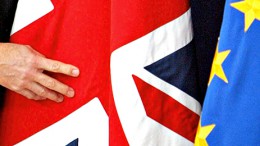
The EU is a union of rules, not a union of force

The European Union (EU) is a group of sovereign states, who are sovereign in that they are entirely free to leave the EU. This freedom to leave means the EU is not a “super state.” There is no coercive force — and no EU army — to make Britain or any other country remain in the union. Britain enjoys a freedom, within the EU, that colonies did not enjoy within the British or other European empires. Britain is, therefore, entirely within its rights in considering the option of leaving the EU, although that does not mean such a course would be wise.


tightening greek belt austerity financial crisis

The politics of debt dynamics in Greece

ATHENS |  By Jens Bastian via MacroPolisThe reprofiling of Greece’s sovereign obligations makes any future debt restructuring an exercise that would almost entirely impact the official sector of Greece’s international creditors. Among these creditors, European institutions such as the ECB, the EFSF and eurozone member states would be affected most prominently.


No Picture

Greek debt viable, no haircut needed

MADRID | The Corner | As Greece and its euro-area creditors meet on Thursday to review its progress ahead of another round of talks on repayment terms for its public deb, the worst for Athens seems to be over. The Mediterranean country doesn’t need a haircut, its debt is sustainable, as head of the EFSF ESM Klaus Regling commented in Brussels on Tuesday. However, and despite the profound, painful reforms the country has been through, recovery is hampered by private debt of households and companies: about 164 billion euros ($208 billion), 90% of GDP.


No Picture

Spanish Treasury bills trading at negative rates for the first time in history

MADRID | The Corner | Although the eurozone economy in August has become the main focus of investors’ concern, peripheral debt continues to attract them. Yesterday, for the first time in history, the Spanish Treasury 3-months bills traded at negative rates on the secondary market. To date, the Treasury has covered 70% of the expected gross issuance in 2014 of 242,370 million euros, which means a decrease in the average cost of outstanding debt of 14 basis points since December 2013 to stand at 3.59% . However, the Treasury decided yesterday to cancel the auction of bonds and notes scheduled owing to the absence of investors because of the summer season.