‘Europe’s other debt crisis’
LONDON | By The Economist via Presseurop | It’s not just sovereign borrowing; there are too many zombie firms and overindebted households.

LONDON | By The Economist via Presseurop | It’s not just sovereign borrowing; there are too many zombie firms and overindebted households.

LONDON | By BARCLAYS | EU Finance Ministers adopted the regulations that pave the way for a single bank supervision in the euro area. As we had expected, however, they failed to make significant progress on a single resolution mechanism. As long as the banking union remains incomplete, the link between banks and sovereigns will not be fully broken and financial fragmentation will continue to prevail.
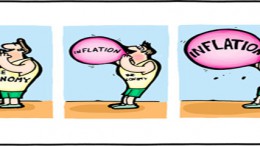
SAO PAULO | By Marcus Nunes | Simon Wren-Lewis concludes considers that we now understand more about the dynamics of inflation and business cycles and so monetary policy is better. “And so monetary policy is better”, but… is it really?
LONDON | By BARCLAYS | Euro area industrial production rose significantly by 1.0% m/m in August, broadly in line with our expectations (+0.9% m/m, consensus: +0.8% m/m). This increase offset the drop recorded in July entirely.

By CaixaBank research team, in Barcelona | Economic slowdown is difficult to stabilise within a context of rising uncertainty that hampers aggregate demand. Economic activity slowed down in the first quarter of the year with negative growth of 0.1% year-on-year, as shown by the detailed figures for gross domestic product in the first quarter. Private consumption continues to adjust, shrinking by 0.6% year-on-year. Gross fixed capital formation has also decreased…
LONDON | Even Ledbury Research, a specialised market intelligence agency that on Thursday released fresh data on the wealthiest few of the British society, acknowledges how tough the task of gaining access to their detailed information is. Yet, the rich hold a vast share of consumer influence and, obviously, economic power in their countries, so it is worth making the effort. What the Wealth Size report brought is a tale…
Two thirds of Americans feel suspicious or skeptical about their country’s economic situation. According to a Gallup poll, only 23 percent said they were satisfied with the way things are going in the United States, down from a 28 percent satisfaction rate last month. Three months before the presidential elections, figures and sondages are multiplying. We’ll certainly see numbers shift, popularity indexes soar and fall before the D-day, and both…

By CaixaBank research team, in Barcelona | With half of 2012 already gone, three issues continue to be fundamental in order to strike some sort of balance in the situation for emerging Europe: the intensity of the financial contagion entailed by the debt crisis, Hungary’s situation and the extent of the slowdown in activity. Starting with the first of these issues, the trend in risk premia, measured by the value…
Interested in the world’s economy? There’s somebody you should meet. He doesn’t have an outstanding experience in the private sector but is determined to drastically cut U.S. government spending, boost market flexibility and avoid the “clouds” that are coming from Europe. If Republicans make it to the White House in november, Congressman Paul Ryan, Mitt Romney’s pick for vice president, will have a bigger say than the president. If not,…

By CaixaBank research team, in Barcelona | After the first six months of the year, it’s time to think about the current situation of the economy and its prospects for the second half of the year. There are two main lines along which the euro area’s activity is running. Firstly, the consensus that its institutional design is not enough to tackle the challenges posed by the current crisis. The absence…