
The weakness of Spain’s exports industry: we need more high-technology investment
Of its total exports, Spain only sells 5% of high-technology products overseas, or 1.65% of GDP. The country needs to boost investment in high-tech goods and services.

Of its total exports, Spain only sells 5% of high-technology products overseas, or 1.65% of GDP. The country needs to boost investment in high-tech goods and services.
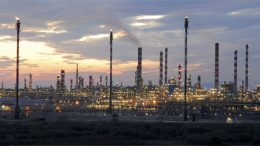
The latest figures have again confirmed what we have been seeing in the last few quarters: Spain is not only not losing industry at the moment, but in fact this is recovering very fast. In January, for example, Spanish industry’s revenues rose 13.1% from a year earlier, the biggest increase since April 2008.
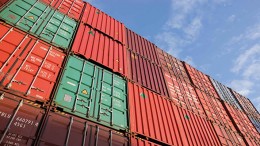
Spain can’t imitate Germany in a context in which Europe is a closed zone where countries export to each other. And Spain is unlikely to become another Germany because the Spanish production model is still based on low productivity.

Spain’s trade deficit declined 22.4% to 18.754 billion euros in 2016, the second smallest figure since 1997, thanks to record exports.
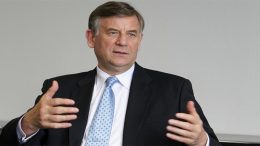
“…One of the reasons for the high level of youth unemployment in Spain has to do with the fact that companies hardly get involved in the dual training system,” explains Hermann Simon the chairman of Simon-Kucher, the preferred consultancy firm of the “hidden champions,” those German mid-cap companies which compete globally. “Spain’s level of innovation is very weak…the whole country cannot live just off tourism services.”
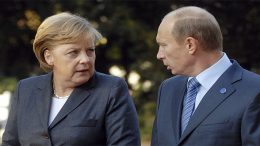
Jens Bastian via Macropolis | As various countries in the European Union prepare for watershed elections in the course of 2017, analysts at www.macropolis.gr will be discussing the implications of these elections and the issues most likely to impact the electoral agendas. We start off with a look at Germany and its strong bilateral (economic) ties with Russia.
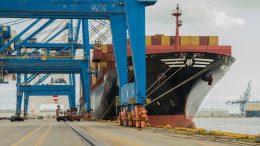
Spanish exports managed to dodge the slowdown in world trade in the first half of the year. According to the latest data from the World Trade Organisation, exports from the 70 biggest economies (which account for 90% of global GDP) fell 5.6% to 6.4 trillion euros in the first half of 2016 from a year earlier, the lowest level since 2011. In this context, the growth rate of Spanish exports (2.4% year-on-year in the first half) has been the largest of the economies.

The trend in the variables observed indicates that the recovery of the Spanish economy continued during the first half of 2016. With nearly 80% of the information available for 2Q16, the MICABBVA model estimates that quarterly GDP growth (QoQ) will have completed one year at around 0.8%. If confirmed, this stabilisation in the pace of expansion would give an upward bias to the growth envisaged in BBVA-Research’s baseline scenario for 2016 (2.7%).
The picture of the Spanish economy is changing thanks to the international activities of its companies, which has been increasing since the end of last year. Those firms which already operate overseas are expanding their business, but there is a risk that the uptick in domestic demand could dissuade new companies from leaving their home market.
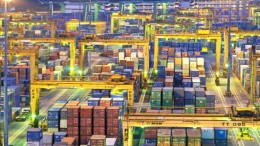
In the seven months to July, Spain’s trade balance registered a new record high since registers began in 1971.