Summers’ retreat paints markets in green
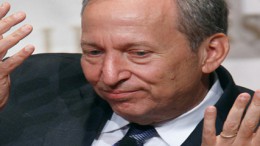
MADRID | By The Corner Team | Ibex 35 exceeded 9,000 points and markets were all in green this morning thanks to the withdrawal of Larry Summers as Bernanke’s substitute.
SAO PAULO | By Marcus Nunes | In a recent post John Taylor leans on Bob Hall to criticize NGDP Targeting. He goes: “In his paper at the recent Jackson Hole conference, Bob Hall criticized nominal GDP targeting, citing his 1994 paper with Greg Mankiw. Bob argues that “A policy of stabilizing nominal GDP growth would require contractionary policies to lower inflation when productivity growth is unusually high. Such a policy might easily trigger a spell at the zero lower bound.”
NEW YORK | By Ana Fuentes | Barack Obama will give six interviews to U.S. media this Monday to build public support about an intervention in Syria. The White House is using its lobbying skills to make a case for an action that for some analysts could compromise the last good economic data.
MADRID | By J.P. Marín Arrese | Christine Lagarde’s stern warning on potential problems ahead for emerging countries has been delivered in rather a blunt way: “even with the best of efforts the dam might leak”. At the annual Fed gathering in Wyoming she claimed “further lines of defence” were needed to address a financial crisis. The hike in interest rates following the prospect of a progressive tapering in asset purchases by the US, has induced a sharp reversal in fund flows between developed and emerging markets.
SAO PAULO | By Marcus Nunes | The author believes that two ‘obsessions’ are at the root of the loss in nominal stability that took place in the Bernanke Fed: the ‘obsession’ with inflation and its counterpart, the ‘obsession’ with interest rates.
BARCELONA | By CaixaBank research team | As Bernanke’s words are digested, it is inevitable that questions come up regarding whether this sequence is correct or, on the other hand, the Federal Reserve’s actions are untimely.
MADRID | All the “Great Depression” stories show how both the governments’ blindness and central banks made the crisis last longer. So it does makes sense that in the current crisis both governments and central banks have been active to take measures, although not necessarily successful and effective. However, the ECB has been less belligerent than other bankers and its members don’t hold homogeneous positions.
MADRID | By Luis Arroyo | Since Quantitative Easing programmes began, the dollar has been strengthened, that is, its price has gone up against the most used currencies in the international markets.
NEW YORK | By Ana Fuentes | Americans blame Bush more than Obama, who seems to be benefiting from the current economic stability. However, everything could change once the Fed stops injecting QE steroids.
MADRID | By Luis Arroyo | Monetary policies are a by-product of politics, after all, and in Europe, politics are tightly controlled from Berlin, which will probably use the Fed’s reaction as example of what the ECB must do.