Markets

bigstock Yawn Tired Businessman Waiti 4098183

Markets may overreact, but bottom-line is plain vanilla

MADRID | The Corner | Yes, it’s boring. The only news you’ll find this Monday are about geostrategy (Israeli-Palestinian never-ending drama and Russian-Ukrainian conflict) and business results. The reduction of volumes of activity as we enter the central weeks of summer could make certain assets (stock markets, bonds, currencies…) overreact in the short-term. But nothing will substantially change.


No Picture

UBS Analysts Expect Further M&A Activity

ZURICH | By The Corner | Based on the results of the 20th quarterly survey of the UBS Global Equity Research department, UBS analysts expect M&A activity in the second half of 2014 to remain strong. 50% of respondents believe M&A will increase and 45% believe the pace will remain unchanged. Only 5% of analysts expect the pace of deal activity to slow in Q3 and Q4.


No Picture

Espirito Santo crisis won’t damage the markets

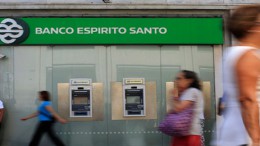
MADRID | The Corner | The disappointing German ZEW together with the worsening of the Portuguese lender Banco Espirito Santo (BES) crisis weighed down on the markets on Tuesday. And that about today? Indeed, the banking sector will continue to be the main player in Europe with the BES drama as backdrop, although the calmness within the peripheral bonds markets is a positive sign and indicates the limited extent of such crisis.


No Picture

Q2 Earnings preview – easier FX, sequentially a bit better growth and hurdle rate has come down

MADRID | By The Corner | Yet again this year equities have moved higher despite negative EPS revisions. While JPMorgan started the year with a constructive outlook on equity markets, they believed that for the 4th year in a row IBES projections would need to be downgraded. The investor concern now is that negative revisions could continue into H2, similar to the trend observed in Europe in each of the last three years.


dollars4 afp 670 580x350

Experts divided on US rate rise

MADRID | By Francisco López | Investors are closely looking economists’ forecasts about the next rate hike in the United States. Until recently, the vast majority opted for movements in the second part of 2015. Now, after the last job creation data, some analysts believe that the rise could come as early as 1Q15.


bull bear

Don’t dismiss a pronounced correction of markets

MADRID | By The Corner | Corporate earnings season (2Q14) is about to start in Wall Street, with Alcoa opening the way and with the major American market indexes –Dow Jones and S&P 500- at maximum levels. The macroeconomic perspectives of the country will also help, especially after having overcome the impact of the weather on the GDP, as well as the certainty that the Western central banks are committed to support the economic recovery. Thus, investors expect that the official interest rates will keep at very low levels in relative historical terms for a long period of time.


US recovery

What the market is really telling about the US recovery

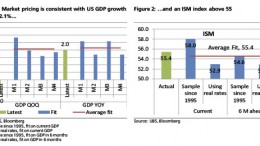
LONDON| By Stephane Deo and Ramin Nakisa at UBS | At the time of writing, the Treasury curve is telling the potential US GDP growth rate is very low – in the neighbourhood of 1%. The 30-year real yield is at 1.09% (but dipped below 1% recently), the 10-year real yield is at a frightening 0.36%, and the 5-year-in-5-year yield, a good proxy of where the market thinks long-term growth will settle, is at 1.05% (but also dipped below 1% recently).Taking those numbers at face value, we would have to conclude that the current recovery is doomed, and that growth will level off soon at a very disappointing level.


ecb1

Why does the ECB feel so uneasy?

MADRID | By J.P. Marín Arrese | Markets are discounting an easing in European monetary policy in the forthcoming days. Yet, the mood in the ECB is far from cheerful. It feels being dragged into action by political constraints.


No Picture

Yet another delay in the long-awaited global growth acceleration

LONDON | By Barclays analysts | 2014 was supposed to be different. After three years of disappointment, this was meant to be the year when the global economy had a broader, higher and more persistently solid level of growth – at least, this was the consensus narrative. In the end, the seasonally adjusted quarterly rate of global growth in Q1 was among the weakest of the recovery. US growth was near zero (probably negative after revisions) and China’s GDP growth was below already low forecasts.


No Picture

Market volatilities are low, but not exceedingly so

LONDON | By Aroop Chatterjee at Barclays | Implied volatilities in a number of asset markets have been recently trading close to their lowest levels since 2007. This has happened despite prevailing uncertainties about the durability of US economic growth or the path of Fed policy.