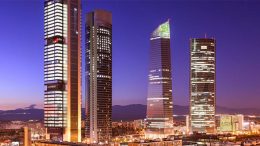
Spanish Companies: From Autarchy To Overseas Expansion
Spanish companies without any subsidies or bailouts have turned themselves around and transformed the former autarchy into a country decidely open to the overseas market.

Spanish companies without any subsidies or bailouts have turned themselves around and transformed the former autarchy into a country decidely open to the overseas market.
Spain’s tourism industry has clocked up a new record. Funcas estimates that by year-end 81.5 million tourists will have visited the country, up 8.2% on 2016. Tourist spending will be around 87 billion euros, up 12% from a year earlier.
CaixaBank Research | Spain’s tourist sector is on course for another record-breaking year, with close to 50 million international visitors arriving on its shores in the first seven months of 2017, an 11.3% rise on 2016 and 49.4% higher than in 2010.
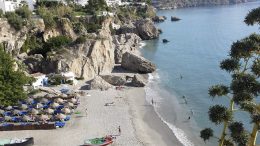
The tourism sector plays a very important role in the Spanish economy. And its prospects are positive looking ahead to the coming years, based on the different statistics available. That said, there are various elements which should make us reflect on whether the Spain’s tourism business is as well focused as it could be and if it is adapting easily to a changing reality.

Tourism spending in Spain in the month of July totalled 11.902 billion euros, up 16.3% from 2016 and, yet again, beating records. Accumulated spending for the year totals 49.119 billion.
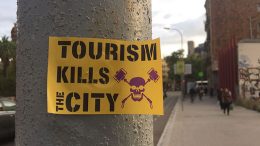
I am the first one to say that we need to change the level of importance that tourism has in our economy, but the proportionate importance. Not get rid of the industry all together.
Spain is well on track for another record tourism year after welcoming 36.3 million tourists in the first half of 2017, a 11.6% increase from a year earlier, according to the Tourist Movement on Borders (Frontur) survey, released by the National Statistics Institute.
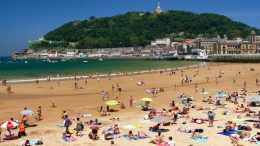
As the Easter week holiday kicks off, the positive outlook for Spain’s tourism and hotel sector augurs yet another record-beating season. During this week, the occupancy rate in some tourism areas in Andalucia will be almost 100%, while on the islands nearly 90% occupancy is predicted.
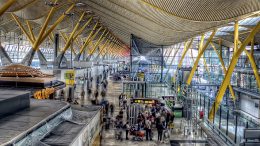
Aena has said that the airlines have increased their seating capacity in planes heading for Spanish airports this summer to 204,7 million, a rise of 8.7% from a year ago.
They say that governing is all about choosing (between what is bad and what is worse) and this government is once again facing a difficult decision: whether to lower AENA’s airport tariffs, thus benefiting Spain’s tourism industry which generates the most jobs, or do their own thing and make money. I say this because, obviously, the best way of making money is not to lower the tariffs AENA charges the airlines.