Articles by Fernando Gonzalez Urbaneja

About the Author

Fernando Gonzalez Urbaneja
Over 30 years working in economic journalism. Fernando was founder and chief-editor at El País, general editor at the business daily Cinco Días, and now teaches at Universidad Carlos III. He's been president of the Madrid Press Association and the Spanish Federation of Press Associations. He's also member of the Spanish press complaints commission.
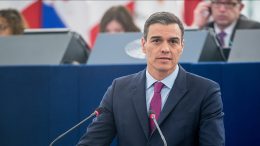
Spanish PM

Spanish elections: Will there be a government? What government?

Fernando G. Urbaneja | An unprecedented tornado of elections has fallen on Spain in 2019. In the short space of four weeks Spaniards can place their papers with their electoral preferences in at least 5 urns, to elect the Congress, Senate, European Parliament, Townhalls and a good part of the regional parliaments. Spring superelections which will overturn a good part of the structure of the state.

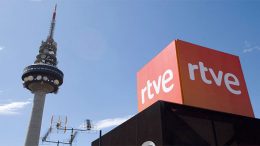
There have always been two debates about RTVE: financing and the nomination of its board which, in theory, should govern it.

Good Governance For Spanish Public Television

There have always been two debates about the Spanish Public Television: financing and the nomination of its board which, in theory, should govern it. Experience says that it doesnt govern it, that the board is a scene for political party confrontation which adds no value, on the contrary.


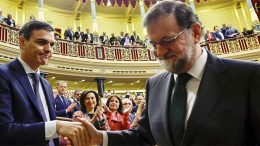
Mariano Rajoy has left the Moncloa to be replaced by the socialist leader Pedro Sanchez

Two Weeks Of Political Upheaval In Spain

Fernando G. Urbaneja | Mariano Rajoy has left the Moncloa to be replaced by the socialist leader Pedro Sanchez, who 10 days before couldn´t have imagined a substitution so rapid or so brutal. However, Spain’s problems remain: whether the demands for Catalan independence and other nationalist forces that threaten the constitution and national unity, or the urgent need for profound reforms in the welfare system and the management of public accounts, threatened by the deficit and the debt.


Pedro Sánchez en Mérida

The Government of Spain takes an experimental path

Fernando G. Urbaneja | The Spanish parliament has suddenly and unexpectedly used a constitutional motion of censure against the government of Rajoy to elect a new government. The new government returns Spain to the ancient ghosts of the first third of the 20th century: multi-party and fractured coalitions.


Forty years of Spanish Constitution, forty years of institutional stability

The Inevitable “Second Transition” In Spain

Whether the secessionists lead the new Catalonia’s government or not after December 21 elections, the weakened Spanish government will be inevitably forced to go through a negotiated constitutional reform which, amongst other objectives, will aim to satisfy the unrepentant Catalan nationalism.


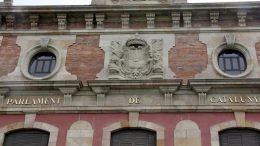
Parlament Catalunya

Catalonia: Immediate Elections To Clarify The Situation

Whether it’s the initiative of the Catalan or Spanish government, Catalonia is this week heading for elections at the beginning of 2018. Some will say the elections are constituent towards obtaining independence and the new Republic of Catalonia. Others will hold the view that they are autonomous elections under the protection of the 1978 Spanish Constitution. In fact what they will be are elections to clarify the current real political map in Catalonia.