Articles by The Corner

About the Author

The Corner
The Corner has a team of on-the-ground reporters in capital cities ranging from New York to Beijing. Their stories are edited by the teams at the Spanish magazine Consejeros (for members of companies’ boards of directors) and at the stock market news site Consenso Del Mercado (market consensus). They have worked in economics and communication for over 25 years.
boris johnson

UK general election: voters say ‘get Brexit done’’?

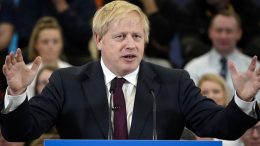
David A. Meier (Julius Baer) | Prime Minister Johnson’s Conservative Party grabbed a commanding victory. An orderly Brexit based on the withdrawal agreement is highly likely on 31 January. Given plenty of looming uncertainties during the transition period, such as the final UK-EU trade relationship and Scottish appetite for independence, we stick to a Neutral short-term British pound outlook.



lagarde

Lagarde announces broad “strategic review” of the ECB’s monetary policy, the first since 2003

Christine Lagarde gave her press conference as the head of the ECB yesterday. While alerting of the risks that the eurozone is facing, she promised to maintain both the official rates and the monetary stimuli of her predecessor Mario Draghi. However, the market’s focus was on the announcement of a broad “strategic review” of the ECB’s monetary policy, the first since 2003. This was interpreted as a possible change in the ECB targets, including inflation below 2%. Banks bounced with over + 3%.


Interest rates

Who or what is to blame for such low interest rates?

DWS | Although many experts accuse central banks, private sector savings and investment trends are equally important. Eurozone sovereign debt yields have rebounded since the August lows but remain firmly anchored in negative territory. The question is not whether the ECB will raise its interest rates again but how to create an environment in which companies are willing to invest to generate profitability and that part of that profitability returns to the lenders. 


brexit the corner

What can we expect from the UK elections?

“If the conservatives of Boris Johnson obtained the majority in the Parliament, the agreement of exit of the prime minister would return to the agenda of the new House and probably it would be approved. The United Kingdom will then begin the transition period (which in principle extends until the end of 2020) during which the future relationship with the EU will be defined,” analysts at Degroof Petercam point out.


European automobiles: entering the next auto decade

European Automobiles: Entering The Next Auto Decade

Bank of America | We think that the next decade in Autos will be all about electrification (global CO2 targets), slower car sales growth, mobility services and a greater focus on cost reforms (material costs, capacity rationalization & personnel costs). Following two years of declining global car sales, we think 2020 could see flat growth. However, we do not believe that this will be enough to offset cost pressures in an industry burdened by high fixed costs (labour) and rising regulatory charges (CO2).


policy rates

Negative rates, negative view

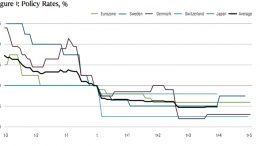
Nicola Mai and Peder Beck-Friis (Pimco) | We believe that negative policy rates could do more harm than good to economies and markets, due to their impact on banks, insurance companies and pension funds, and also a possible adverse effect on consumption. Below, we discuss potential implications for investors.


European equity funds

Five consecutive weeks of inflows into European stocks (weekly average of +2.4bn)

Santander Corporate & Investment | Waiting for PMI business confidence indicators to show signs of substantial improvement and in the absence of developments in trade negotiations, interest rates on government bonds have receded slightly, which has again given prominence to defensive companies while cyclicals take a break after the rally that began in September.