
European economy

cryptocurrency general

Growth Of Crypoassets Does Not Threaten EU Banking Sector

Sam Theodore ( Scope Ratings) | Banks and investors are apprehensive that the growing presence of crypto assets (CAs) could shake the edifice of European banking, impacting core activities like lending, deposit taking, trading, and investments. Those concerns may not be entirely misplaced, especially for banks that are digital laggards, but they are for the sector in general. I am less concerned when it comes to banks that have made…


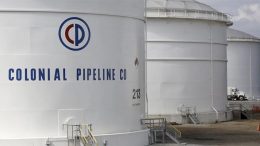
colonial pipeline

Cyberattack On Largest US Oil-Products Pipeline: We Could See Europe Start To Ship Gasoline To The US

Aneeka Gupta (Wisdom Tree)| Colonial Pipeline Co., a supplier of gasoline, diesel, and jet fuel to the eastern US, was forced to halt operations on Friday owing to a ransomware attack that affected some of its IT systems. If the outage were to last for an extended period of time it could have far reaching effects on the oil markets extending beyond the US and impact Europe as well. In order to plug the shortfall in gasoline in the US East Coast we could see Europe start to ship gasoline to the US.


eurozone labour market

The Eurozone’s Labour Market: Large Inequalities Between Sectors

At first glance, the “scar” on total employment looks set to be less deep than after the 2008 financial crisis. However, at the sectorial level, the shock may turn out to be deeper or longer lasting. One example is tourism, one of the sectors most affected by the pandemic and one of the most labour-intensive. These sectorial divergences may have consequences for the pace of recovery in European countries depending on their degree of exposure to tourism.


Eurozone housing prices

European House Prices: Time For Regulators To Hit The Brakes?

Scope Ratings | European house prices increased on average by 6.2% in 2020. That was twice the annual rate of the last decade and even higher than growth in the economically very favourable last five years. Few banks have so far amended their underwriting criteria and, in most countries, previous macroprudential measures have been reduced and/or halted. As such, this may be the right time for regulators to become proactive.


dollar rally

While Europe Is Expecting An Inflation Peak Of 2.5%, The US Is Talking About 4.1%!

Mutuactivos | How would you react to an inflation figure of 4.1%, albeit temporary? In short, we believe that it could push the T-note above 2% temporarily, even a scare in the markets, but in that case it is likely that the Fed would try to influence it to moderate it: either by changing its “active passive” discourse to one of greater involvement, closer to that of the ECB, or directly by buying debt to control the yield curve.


ECB Bundesbank

Central Bank Independence: From The Theory To The Practice

Javier García Arenas and Adrià Morron Salmeron (CaixaBank ) | The independence of central banks seems indisputable, even more so in these times of pandemic, in which they have increased their use of unconventional policies and provided coverage for the high funding needs of states. In this article we will explore the theory and empirical evidence supporting the importance for central banks to maintain their independence.


veolia suez

After Months Of Confrontation, Veolia Will Launch A Takeover Bid For Suez, Creating A Group With Revenues Of €37 Bn

Alphavalue | The boards of Veolia Environment and Suez have reached an agreement on the companies’ merger. After months of confrontation, Veolia will launch a takeover bid for Suez. In a statement, the two firms said the price of the bid will be 20.5 €/share, valuing Suez at 12.9 billion euros. This is an improvement of 13.9% on the 18 €/share that Veolia had proposed up until now and which was one of the main blocking points for the deal. Suez had set a price of €22/share as a condition.


Eurogrupo Europa chuli

N.G.E.U. | Private Investment As The Engine Of Economic Growth And Social Welfare

Rafael Domenech & Jorge Sicilia (BBVA Research) | The empírical evidence for a large sample of countries at different stages of development since 1960 to the present shows that an increase of 10 percentage points in the ratio of private investment to GDP corresponds to an increase of 3.1 points in the long-term growth rate of per capita income, higher than the elasticity of 2.7 obtained between total investment and growth. The empirical evidence points to private investment being typically allocated more efficiently than public investment, indicating that the best strategy is for public investment to be complementary and incentivize higher private investment.We see this as evidence that the focus of policies oriented to providing fiscal stimulus to incentivize private investment, such as the European Fund NGEU as an adequate strategy to increase per capita income growth in the long term in European economies.


Lack of political will for renewables energy

EU: The Share Of Renewables In The Mix Rose To 39%, Beating Fossil Fuels (36%) For The First Time

The share of electricity generated from renewables in the EU energy mix (39%) exceeded the share of fossil fuels (36%) in 2020 for the first time ever and EU consumption of both electricity (-4%) and gas (-3%) fell from 2019 levels, but most of the drivers for this change (notably the COVID-19 pandemic) were exceptional, according to the latest Commission quarterly reports on gas and electricity markets published today.