
In the World


okNamibia

Apologies Or Reparations?

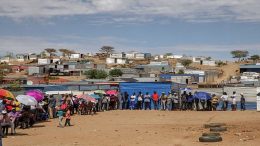
Donato Ndongo-Bidyogo | Tanzania also wants reparations from Germany for the atrocities carried out between 1905 and 1907. “Other countries have been compensated for war crimes. Why not us?, said MP Cosato Chumi. ​Berlin acknowledges the genocide but it doesn’t want to pay reparations and it is trying to agree some formal apology with Windhoek (Namibia). Ruprecht Polenz, the German negotiator says genocide does not imply reparations, only political and moral redress. In Dodoma (Tanzania), the German Foreign Minister Heiko Maas proposed “forms of mutual support” other than “compensation.” Given the concern of other former empires and the necessary paradigm shift in Euro-African relations, Merkel is in two minds about opening this Pandora’s box. 


Jay Powell

Inflation Is The Key

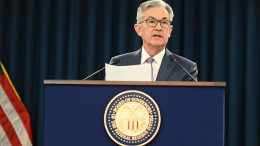
Chris Iggo (AXA Investment Managers) | Next month the Fed is expected to announce some changes to its long-term monetary policy framework. Many observers expect that to include an “average inflation target” which in theory means the Fed will allow inflation to rise above 2% for a long enough period to compensate for when inflation has been below 2%. It likely will need to back this up with forward guidance suggesting that rates won’t be increased until it is convinced its inflation target (and maybe an unemployment target) has been met. 


Gold

A Moment In Markets – Was It A Shift In Sentiment?

Mobeen Tahir, Associate Director, Research, WisdomTree | On Tuesday, 11 August, gold fell by over 5% and silver retreated nearly 15% prompting investors to wonder if there had been a material shift in market sentiment. Are defensive hedges no longer required? How important are gold and silver as risk sentiment improves? A glance towards the wider market, and indeed economic fundaments, can help answer these questions.


US flag

U.S.A… The perfect storm

BBVA Research | Bureaucratic missteps by the CDC and the FDA, contradictory messages from elected officials, disregard for intelligence reports, science and experts, lack of medical equipment, years of underfunding public-health departments, spread of misinformation, and private healthcare institutions with misaligned incentives created the perfect storm. Unfortunately, the number of deaths will increase further. According to the Institute for Health Metrics and Evaluation, total deaths could reach 205K to 524K by December 1, implying that Covid-19 will rank as the third leading cause of death in 2020, after heart disease and cancer. 


US presidents

A Slow and Uneven Recovery Still Likely Despite July’s U.S. Price Bounce

Tiffany Wilding, North America Economist, PIMCO | A rebound in prices across travel and leisure categories in July 2020 drove the largest increase in core U.S. inflation since January 1991, with the core Consumer Price Index (CPI) increasing 0.6% month-over-month (m/m). This was enough to boost the year-over-year (y/y) rate to 1.57% as of July, up from 1.19% as of June, despite expectations for a further drop amid the economic challenges posed by COVID-19. The sectors hit hardest by the crisis were the same categories that led prices higher in July. Shelter price inflation also rebounded.


China Coronavirus fears hit equity markets

The Great Lock-Down Is Ending In Emerging Asia As Growth Collapsed And Fiscal And Monetary Space Is Limited

Trinh Nguyen (Natixis) | After the Philippines reported a shocking decline of GDP of -16.5% YoY, Malaysia topped it off with GDP falling by -17.1% YoY. The deterioration is in line with other Southeast Asian economic weakness -Singapore fell -13.2% and Indonesia -5.3%, much worse than during the Great Financial Crisis (Vietnam is the only that has positive Q2 GDP growth in ASEAN). While some of it is due to external demand decline, the severity of economic contraction is self-imposed via suppression measures that crushed domestic economic activity.


Global inequality is on the rise – but at vastly different rates across the world

Global Poverty: Coronavirus Could Drive It Up For The First Time Since The 1990s

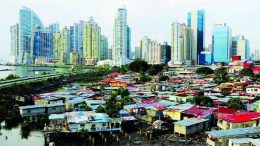
Andy Sumner, Christopher Hoy and Eduardo Ortiz-Juarez via The Conversation| As COVID-19 slows in developed countries, the virus’s spread is speeding up in the developing world. Three-quarters of new cases detected each day are now in developing countries. And as the pandemic spreads, governments face juggling the health consequences with economic ones as this shifts to becoming an economic crisis.


US China relations

The Technological Threat Intensifies In The Face Of The US Presidential Election

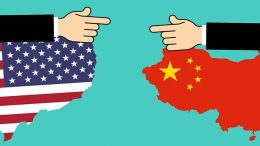
Escalating tension between the United States and China will encourage volatility as the Presidential Election approaches and measures taken against Chinese technology will be the focus. Investors underestimate domestic policy support for Chinese technology, as well as the political risks to American technology, explains Evan Brown, Head of Multi Asset Strategy at UBS AM.


capitalism1

The Promises Of The Varieties Of Capitalism, Or On The Impossibility Of Having It All

CaixaBank Research |  The American political philosopher John Rawls coined the concept of the «veil of ignorance». Under this somewhat cryptic expression lies a suggestive notion: in order to determine which society is the best one to live in, we must ask ourselves: «if I did not know what position I would have in this society, in what kind of society would I choose to live in at birth?»