The Crash From A Different Perspective
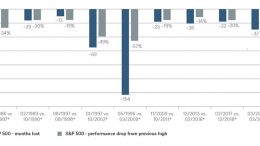
DWS | The S&P 500 trades about one third below its high. This means that all price gains since the start of 2017 have disappeared. In 2008/09 much more was wiped out.

DWS | The S&P 500 trades about one third below its high. This means that all price gains since the start of 2017 have disappeared. In 2008/09 much more was wiped out.
“It would be a mistake to believe that anything US Congress approves will be a definitive solution for the economy, at least in the short term. As for the size that the economic aid should have, PIMCO believes that “an increase in public spending of 4% could serve to compensate for the economic damage in the short term”
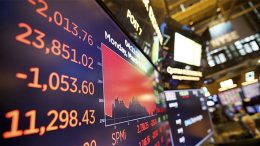
Manuel Moreno Capa | In over three decades of writing about this, I find it hard to remember a piece of news like the one I read on the specialized website Citywire on March 18: UK fund manager H2O Asset Management apologized to its clients for the heavy losses suffered in its two investment funds due to the coronavirus crisis. According to Morningstar data, the two H2O funds had fallen by no less than fifty percent in four weeks (until Monday 16).
It will take until the end of 2022 for global GDP to recover to pre-coronavirus levels. The economic situation caused by this global coronavirus outbreak changes every day. However, the Research Institute of Aberdeen Standard Investments believes the world economy will avoid the end-of-cycle recession, even though the global shock will be significant.
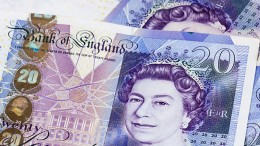
Ranko Berich (Monex Europe) | The UK’s response to the incoming coronavirus shock has been about as aggressive as possible in terms of monetary and fiscal policy, but this has done nothing to help sterling. Idiosyncratic factors such as the UK’s monetary and fiscal response or Brexit are beside the point: this is about the US dollar, which is proving unstoppable as global financial markets stare into the abyss of crisis-like conditions.

Markus Allenspach (Julius Baer) | Step by step, the policy mix is changing around the globe. Most impressive fiscal support packages are in the making in the US with USD 1 trillion to USD 1.2 trillion, in Spain with EUR 200 billion, in France with EUR 345 billion and in Germany with guarantees of up to EUR 550 billion, tax cuts and waivers of social contributions.
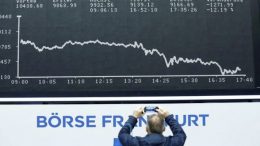
M&G Valores | Investors are facing great uncertainty about the economy. Chinese economic indicators for February show a depression-like drop in activity: retail sales fell by 20% y-o-y in February compared with normal growth of 10%; industrial production fell by 13%. Even in the crisis of 2008-09 it had not been negative. This is what we will most probably start to see in Europe soon. Obviously, this does not mean that we are heading towards a Great Depression.
Bankinter | To avoid Covid-19 hit was not possible because it is an exogenous factor to the economy, unleashing this hyper-violent reaction as never before. We suspect this is due to the activation of the stop-losses of passive management. The failure of the central banks (mainly the ECB) and the slow and lukewarm reaction of governments have allowed the markets’ own inertia to increase.

Joachim Fels (PIMCO) | The Fed just announced a comprehensive easing package: near-zero policy rates, large-scale QE in Treasuries and MBS, lower rates on fx swaps and regulatory relief for banks. This is a close as it gets to “whatever it takes”. Still, a global recession seems to be a foregone conclusion. First and foremost, this will require a very large fiscal response to support individuals and businesses adversely affected by the crisis.
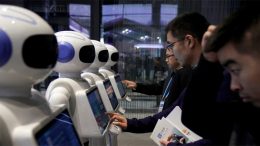
Caixabank Research | To date, technological change has been key to the economic and social development of the human race. Despite this, the technological revolution that we are currently experiencing, with artificial intelligence (AI) at the helm, is a source of not only wonder but also some misgivings. These misgivings may be due to the new nature of the technologies of the future and the disruptive effects they could have on our economy and society. At the same time, these new technologies could be key to the revival of economic growth that is faltering so much in our European environment.