China

coronavirus china

China Has A Buffer For Contingencies

Intermoney | China surpassed its economic growth previous to the health crisis. Specifically it recorded 6.5% per year in Q4’20, when in the same period in 2019 it grew by 6%. Thus guaranteeing China’s rapid recovery, while also highlighting the country’s margin for facing up to any temporary turbulence linked to the resurgence of COVID-19. Furthermore, China would encourage the population to continue working to limit the number of people returning to their places of origin during the New Year celebrations.


china industry

China: 2021 GDP Growth To Bounce Back To 7.5%.

Jinyoue Dong & Betty Huang (BBVA Research) | Vaccination, accommodative monetary policy with “no sharp turnaround”, possible alleviation of China-US tension under Biden’s presidency and deflationary environment give Chinese authorities a chance for a short respite in 2021.


china lantern

Chinese Economy, Priorities For 2021

Morgan Stanley | With growth already at pre-Covid levels, China has announced its priorities: a gradual exit from stimulus, internalisation of the yuan and reduction of carbon emissions. These are  some of our predictions: Foreign Exchange reserves of $3,190 bn (vs $ 3,178 bn in November 2020; Headline inflation from -0.5% to 0% and a credit growth down 0.1% to 13.6%. Furthermore, we estimate that the deficit will fall to 12% of GDP, after reaching a record high of 15.4% in 2020. But still above 9.9% in 2019. 


china blues 1

Tailwinds For China May Get Stronger Still

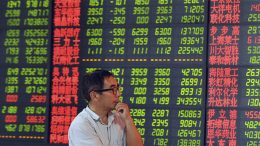
Chinese equities are responding positively to the macro tailwinds. The S&P China 500 Index – a diversified index which includes both onshore and offshore listings – is up nearly 31% year-to-date. This compares to the S&P 500 Index which is up around 13% over the same period. These are encouraging signs for those interested in Chinese equities – strategic and tactical investors alike.


RCEP summit

China | What is the implication of RCEP to Chinese and regional economy?

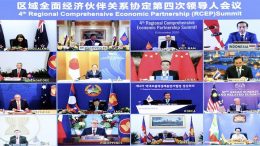
Jinyue Dong, BBVA Research ! On November 15th, Asia Pacific nations including China, Japan, South Korea, Australia and New Zealand plus 10 countries of ASEAN signed the world’s largest regional free-trade agreement which is the so-called Regional Comprehensive Economic Partnership or RCEP, with the member countries encompassing 2.2 billion people that is nearly a third of the world’s population and USD 26.2 trillion GDP as around 1/3 of the world GDP as well as 1/3 of world’s total trade volume. Top officials from 15 nations inked the RCEP nearly a decade in the making on the final day of the 37th ASEAN Summit hosted virtually by Vietnam this year. The completion of negotiations is a strong message affirming China, Eastern Asia and ASEAN’s role in supporting the multilateral trade system. In addition, the agreement will contribute to developing supply chains that have been disrupted due to the Covid-19 pandemic and the China-US decoupling, as well as supporting the regional and world economic recovery. Obviously, the signing of RCEP which has experienced eight years of negotiations among member countries has essential implications on Chinese and regional economy…


china

China: Small Data, Big Impact

Unemployment in China, which rose to 6.2% in February, is down to 5.4% in September – only marginally higher than 5.2% in December 2019. Industrial production increased 6.9% year on year in September – the highest increase since December 2019. This data point has vindicated the strong recovery in Purchasing Managers Indices (PMIs) – which are important, but only show month on month change in activity. Retail sales – an important barometer of consumer wellbeing – have also bounced back and risen by 3.3% year on year in September after being negative between January and July this year.


BANK OF CHINA

The Unintended Economic Impacts Of China’s Belt And Road Initiative

Daniel Wagner | China’s footprint in global foreign direct investment has increased notably since the launch of the Belt and Road Initiative (BRI) in 2013. That served to bring Chinese overseas FDI closer to a level that one would expect, based on the country’s weight in the global economy. However, China actually invested more in countries outside the BRI during the period, given that Chinese investment in developed countries tends to have larger market values, particularly for mergers and acquisitions.