China

UBS1 1

US And China Millennials Do Not Mark The End Of European Luxury

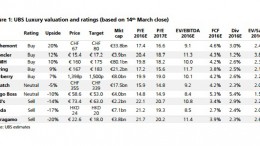
UBS | Following our recent launch report on European luxury we have undertaken an analysis of US and Chinese millennial (18-34 years) spending together with UBS Evidence Lab based on our survey of 2,109 consumers. We conclude that millennials will not mark the end to luxury consumption that some fear.


china IMF

Amidst Concerns Over High Debt, China Promises To Do Its Homework

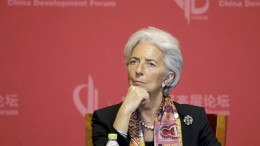
Christine Lagarde’s two-day-visit to China concluded on Monday without any specific agreements on how Beijing will fend off financial risk. But Premier Li Keqiang insisted that they will use all the tools available. Trillions of renminbi of debt have built up in the Chinese economy as a result of decades of stimulus and easy credit.


China Fabrica3TC

Redefining The China Dream

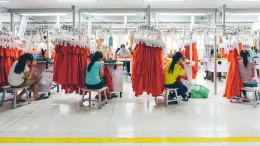
Caixin | Lijia Zhang burst onto the international literary scene in 2008 with a memoir about her rebellious journey from disillusioned factory worker who spearheaded a walkout in support of the Tiananmen Square demonstrators in 1989 to becoming a writer and journalist. Her first book, Socialism is Great! A Worker’s Memoir of the New China, published by Atlas & Co., describes how she dreamed of escaping the stultifying routine of factory life, while reading Jane Eyre hidden within the folds of The People’s Daily. The book has since been translated into seven languages.


china options

China Enters Zugzwang

BARCLAYS | In chess, the concept of zugzwang refers to a point in the game where any change in the status quo weakens a player’s position. The ideal choice would be to not make a move, except that “pass” is not an option. This concept effectively explains the choices that confront China’s policy makers.


china industry

The Only Solution: US, EU Help For China

In one year, China has used up $ 676 billion of its reserves, which had reached a total of $4 trillion. It could let the remimbi fall and restore monetary autonomy in order to lower rates and boost an economy which is in recession. But this only serves to worsen the volume of debt in dollars, which of course erodes the status it seeks for its currency. The only solution: EU, US help for China.


panic

Don’t Allow Someone Else’s Panic To Cloud Our Judgement

There are apparently two imminent threats to the world economy which is the reason why the markets have tumbled: the damage low crude prices could cause for investments in the oil sector and the global financial system, and the fact the fall in oil prices may reflect the sharp slowdown in China. But both of these issues seem cloudy.


China's monetary transition

China’s Economy Is Not Collapsing

Danny Quah | For three decades now, many of the world’s most insightful observers have predicted the imminent demise of China’s system. But these same three decades have also seen China confound expectations. China’s economy turned in double-digit growth rates. China lifted 600 million people out of poverty.


china drags

China Drags The Markets Down

Hopes for a soft landing in the Chinese economy are fading away. Focus sharpens on renminbi as it dips to increasingly low levels, challenging Central Bank’s massive interventions. China still commands sweeping foreign reserves but, over the latest months, they have shrunk by nearly one trillion dollars. Markets fear they could meltdown forcing a massive depreciation.


china Soes

A Gentle Nudge for Better Corporate Governance

Caixin | Last month, the G-20 summit held in Turkey endorsed the G-20/OECD Principles of Corporate Governance. As a G-20 country, China is on board with the standards, too. That means Chinese companies, especially state-owned enterprises, must adhere to the principles.


dragon

The Dragon’s Tail: What Would A 4% China Do To World’s Markets?

UBS | Our base case forecasts for China’s growth are already below consensus at 6.2% for 2016 and 5.8% for 2017. In this note we study the impact on global economies and assets of a much darker and, in our view, extremely unlikely scenario where China real GDP growth slips to 4%, and nominal growth below 1.5%.