
The ECB: “A careful normalisation which should start gradually”
Intermoney | There is little in the way of significant economic data due out in Europe today, so the main focus will be on the minutes of the ECB’s last meeting.

Intermoney | There is little in the way of significant economic data due out in Europe today, so the main focus will be on the minutes of the ECB’s last meeting.

The non-banking sector in Europe currently accounts for 54% of total assets versus 42% in 2008. But interestingly, it’s in Germany and Spain, amongst the big countries, where banks maintain their weighting in absolute terms and in relation to their products.

J.L. M. Campuzano (Spanish Banking Association) | The global central banks are putting their plans for monetary normalisation on the table. But they also recognise that inflation risks are contained in the short-term. That means they have a margin of time to proceed with monetary normalisation in a cautious and patient way.

The European Central Bank (ECB)’s non-conventional measures contributed 1,7 percentage points to Spain’s real GDP growth between 2014 and 2016, while also helping to cut the public deficit by 1,9 percentage points over the same period.
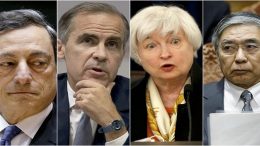
J.L.M. Campuzano (Spanish Banking Association) | The increase in the size of the central banks’ balance sheet has without doubt been one of the untraditional measures of the financial crisis. But the president of the ECB has anticipated that probably at its next meeting in October a scheme will be worked out to progressively reduce the asset buying programme.

The ECB governing board will meet today amidst a climate that doesn’t invite a move of any kind. It goes without saying that the only open option is whether or not to launch a discussion on how to undertake the tapering of its asset buying programme.

Ever since December last year, when it reached its low point, almost at parity with the dollar, the euro has not stopped rising. And the European economy is doing much better than that of the US.

On the whole, the Jackson Hole symposium provided very little in the way of fresh indications on either the Fed or the ECB’s monetary policy, market experts say.

US Fed chair Janet Yellen and ECB President Mario Draghi will both be speaking at the Jackson Hole conference later this week. They will be under close scrutiny from investors for any clues on future monetary policy decisions. Analysts believe the Fed should matter more than the ECB at this week’s event.
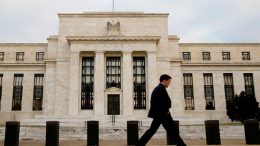
The minutes released by the FED and the ECB last week shared concern about how to inform about their monetary stance. They fear unsettling the markets should investors wrongly interpret the messages conveyed to them. When you lack a clear policy perspective, the best thing you can do is to manage communication in a fairly tight way.