Articles by The Corner

About the Author

The Corner
The Corner has a team of on-the-ground reporters in capital cities ranging from New York to Beijing. Their stories are edited by the teams at the Spanish magazine Consejeros (for members of companies’ boards of directors) and at the stock market news site Consenso Del Mercado (market consensus). They have worked in economics and communication for over 25 years.
semi permanent government deficits

A Plea for Semi-Permanent Government Deficits

Francesco Saraceno | There are a number of ways, not necessarily politically feasible, to allow EMU countries to run semi-permanent government deficits. A first one could be to restore complete national budget sovereignty, (scrapping the Stability Pact). This would mean relying on market discipline alone for maintaining fiscal responsibility.


Ferrovial-Toronto

Ferrovial Still 407 ETR Dependent

Carax- Alphavalue | 2016 is no great vintage for Spanish group Ferrovial (Add, France) which spent the year sailing into headwinds including the bankruptcy of one of its US toll roads in March, Brexit in June (36% of sales are generated in the UK) and the widening of South European sovereign spreads from October.


BRICs breaking

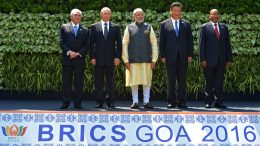
It Is Time To Break Up The BRICS

BoAML | One of the most popular ideas in emerging markets economics is grouping Brazil, Russia, India and China together. Here we argue that grouping these very different economies together for economic forecasting was never very useful in the first place. The only thing they have in common is size. The recent divergence in the group makes it even less useful.


Greece and the IMF

The IMF And Greece’s Bitter Pill

Yiannis Mouzakis via Macropolis | What you are going to read could very well be extracts from a Yanis Varoufakis interview in the first half of 2015, when – in a clumsy manner that rubbed everyone up the wrong way – he was advocating that Greece and its lenders should change course.


Central banks' QE was a powerful driver of the economy and markets

Central Banks Face A Moral Dilemma With Monetary Normalisation

Of all the arguments I have heard against monetary normalisation, I would definitely highlight the potential destablising effect which it could have on some financial markets. And I am not emphasising this in a positive way: I sincerely believe that delaying a decision which can help reduce uncertainty in the medium and long-term to avoid a negative impact (which I think will be limited) in the short-term is, without any doubt, questionable.


markets

What If The Market Is Being Too Complacent About Trump’s Inflationary Effect ?

The markets are still discounting the inflationary impact of Trump’s measures. Furthermore, they are anticipating the positive effects of his fiscal policy, the best short-term guarantee of which is in economic agents’ shift in expectations. Our criticism of excessive complacency on these issues is well-known, although it’s true that the market doesn’t see it that way.


The year has just started with the banking sector rising strongly

Spain, Italy, Germany and Austria the markets with highest options of banking M&A

According to Moody’s, the markets where there are the highest possibilities of integration are Spain, Italy, Germany and Austria. Unlike Italy’s banks, Moody’s believes the Spanish lenders are under less pressure to reduce their unproductive assets, thanks to the improving economic cycle and increased profitability at the operating level


renewables

New Proposal On Premiums Will Hit Spanish Renewables Retribution

In 2016, Spain’s Energy Ministry needs to revise the parameters related to the adjustment of green energy premiums included in the 2013 electricity sector reform. The proposal which Energy Minister Alvaro Nadal has sent to the National Competition Commission, pending amendments in order to have it ready before end-year, has not gone down well with green energy producers. They say that the proposal, as it is, limits the premiums and does not allow them to reach the stipulated reasonable rate of return.