Germany

Angie merkel

The German Rescue Fund Reaches €1.3 Tr (4% GDP), By Far The Largest In Europe

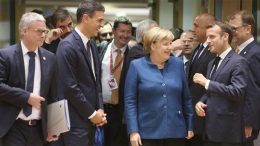
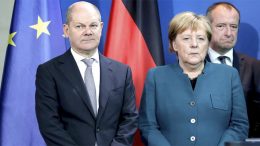
In Germany, Angela Merkel has announced a 130 billion euro stimulus package to combat the crisis caused by the pandemic. After the second day of negotiations, the German coalition government has managed to agree on an aid programme to be implemented between this year and next, which will be added to the one launched in March, valued at 156 billion euros, exceeding the initial estimates of 50-100 billion.


German business expectations

The First Part Of German GDP’s Drama In Detail

Martin Moryson (DWS ) | The data published yesterday by the Federal Statistical Office confirms the 2.2% decline in German economic output in the first quarter. This had already been calculated in a previous estimate. Combined with the last negative growth quarter of 2019, Germany is now officially in recession. However, Q1 is only the beginning. The real drama will only become evident in the figures for the Q2. Here we expect a 10 percent decline.


ECB at dusk

The ECB Increases Its Emergency Purchases By 54% In The Week Of Germany’s Constitutional Court Ruling

Just a few weeks before the ECB’s key meeting (4th June), Lagarde has responded to Germany with the biggest weekly purchase since the start of the pandemic: 44 billion euros, 54% higher than the weekly average since April. Furthermore, Olli Rehn affirmed that the German Constitutional Court’s ruling could have an impact on the central banks’s ability to exercise its price stability mandate.


Karlsruhe Court

Why Is The German Constitutional Court Now Challenging The ECB’s Purchase Programme And European Justice?

The German Constitutional Court surprised everyone yesterday with a ruling that some of the European Central Bank (ECB)’s actions, carried out as part of its 2015 bond purchase programme (PSPP), are unconstitutional. This decision clashes directly with the judgement of the European Court of Justice (ECJ). The decision does not call into question the entire debt purchase programme, but rather the part relating to the Bundesbank’s intervention.


aranceles china

The Coronavirus Crisis Could Cut 0.15% Off Spain’s Economic Growth; 0.18 off German Growth

Yesterday, ratings agency Standard & Poor’s published a report where it calculates that China’s coronavirus crisis will subtract one or two tenths off economic growth, both in the Eurozone and in the UK, in 2020. This is due to the impact on exports to China and on business investment. In Spain’s case, the figure may be excessive. This is because the impact on imports from China must also be taken into account and will work in Spain’s favour.


Germany

Germany, Today, Is Dependent On China

The world has changed a lot because China has changed a lot. China’s share of global GDP has risen from a negligible 2% in 1990 to 15.9%. Meanwhile, the other powers have fallen in that period: Japan, from 14 to 5.8%; Europe, from 35% to 21.9%; and the USA, from 27% to 23.9%, according to Weltbank data.  So hundreds of thousands of jobs in Germany are now dependent on China. And all over the world, because China today accounts for 1/3 of world growth.


German

Germany: No fiscal measures for now; DAX outperforming

There are a few paradoxes in Europe’s biggest economy unquestionable economic slowdown. Labour market remains solid. The last macro data shows a lower deterioration than expected, thanks to the expansion of other neighboring economies such as the French. Also, Berlin malaise has not hit the stock market. The DAX has outperformed other European indexes this year.


Germany: what will happen with the German middle class

Germany: What will happen to the middle class

Lidia Conde (Frankfurt) | The fourth globalization now punishes the German middle class, which perceives how the revolution accelerates and introduces new elements such as the competence of Indian computer experts operating from home: they do not need to emigrate to work.


Germany

Germany Cycle: Stabilisation At Low Levels Provides Little Comfort

Gilles Moëc (Axa Investments Manager)| Those who like to see their glass half full probably took comfort in the fact that in Germany the manufacturing Purchasing Managers Index rebounded by 0.2 pp in October relative to September, but this was again short of expectations and the absolute level remains very concerning.