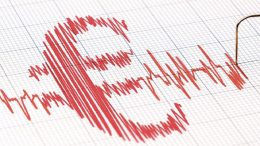
The Euribor Shows Signs Of Life, Rising One Basis Point
Yesterday, April 19, after being flat for months, with no pulse, the Euribor finally showed signs of life. It moved from the range of -0.190% (average for April) to -0.189%. One basis point.

Yesterday, April 19, after being flat for months, with no pulse, the Euribor finally showed signs of life. It moved from the range of -0.190% (average for April) to -0.189%. One basis point.

According to a note to clients, Morgan Stanley believes that UBS, HSBC and Société Générale should perform well during the quarter. Compared with the US Banks, they have a downward risk due to investment banking fees and upside due to the outlook for equities.
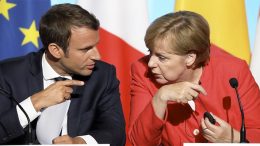
It’s been some time since Europe has had a leader with such clear ideas as Emmanuel Macron, but Angela Merkel is not really happy about it. And that’s logical, because she has been calling all the shots. She has the power in Europe and so don’t expect even the slightest concession from her which is anything more than esthetic.

One of the strategic points in the agreement of GroKo III is fiscal policy. After three years in «austerity mode» it now seems to be changing direction. CaixaBank’s economists analyse this in more detail.

Analysts at BoAML expect Greece to expand by 2% in 2018, with risks becoming more balanced since growth performance has consistently surprised official forecasts to the downside so far. Furthermore, a stronger recovery requires decisive action on debt relief and dealing with bank NPLs.

Javier Arce | The ECB does not get the banks to move their money, interbank market is still broken and eurozone lenders are accumulating the ECB’s liquidity injections (almost 700bn) at the central bank itself.

There are rumours of a corporate transaction. Iberdrola, Gas Natural, Engie and Enel are tipped in the press to be candidates for a key role in a corporate deal with EDP. These companies would potentially be interested in participating in an operation, so as not to be outmanoeuvred in the next wave of mergers in the sector.

Eurozone banks are currently keeping 690 billion euros at their central bank, according to the ECB’s last figures. While the European Commission aims to achieve by end-2018 a completed banking union, this an evidence of a more fragmented market. Are lenders suspicious of their refinancing capability in order to honour their debts? And why is Ewald Nowotny asking to cut them some slack?

Ewald Nowotny, a member of the ECB Governing Council said recently he was comfortable with the possibility of an increase in the deposit rate, from -0.4% to -0.2%, “as a first step” before any change in the official interest rate. At April 6, European banks kept 690, 384 million euros in the ECB. It’s the first time, since interest rates have been at a record low of 0%, that an ECB member has talked so clearly about a rise.

The “eternal return” to a proposal to leave the euro seems to be an irresistable force for some people. A current case in point is Italy, but there are a couple of interesting precedents in the files, like Greece and Ireland.