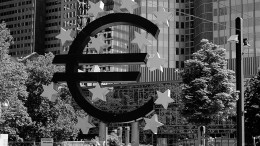
Unpleasant rumblings in Euro land
James Alexander | As some debate raged in the corridors of the ECB about both Draghi’s successor and over when and how to end the QE for the EUR, the common currency remained strong, helping keep the USD weak.

James Alexander | As some debate raged in the corridors of the ECB about both Draghi’s successor and over when and how to end the QE for the EUR, the common currency remained strong, helping keep the USD weak.
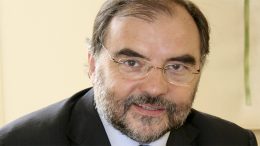
Fernando Rodríguez | The MifidII obliges the 100,000 professionals who inform and advise on finances in Spain to be accredited as being technically qualified to do this job by January 2018. Spain is the only country in Europe which doesn’t have any regulation in place regarding professional qualifications.

The balancing acts which are devised in Frankfurt oblige us to once again take a look at the present and future of inflation in the Eurozone, focusing our analysis on the prices chain. “The ECB did this exercise and the conclusions favour the institution’s caution,” they explain.

In these uncertain times, politics seems to have lost many of the certainties that had been so clearly signposted for voters in the Western World in recent decades. The terms “left” and “right” have often become hard to pin down, especially since the arrival of a gamut of disruptive populisms.

New French president Emmanuel Macron wants to solve the problem of the stability of the euro and its finances once and for all, by implementing some kind of European Fiscal Union.

Nick Malkoutzis via Macropolis | The stock phrases came thick and fast after Monday’s Eurogroup. “Great progress,” “very close” and “an agreement in a few weeks” were a few of the perennial quotes trotted out again by officials following a failed attempt to settle differences over Greek debt relief.
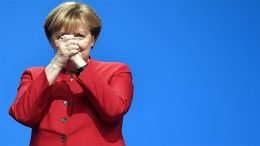
The damping of the refugee crisis and the strength of the economy have weakened German voters’ desire for a radical change. If Angela Merkel is re-elected as chancellor, the financial markets are likely to function normally.

The annual growth rate of the outstanding balance of securities representative of the debt issued by Eurozone residents has slowed, rising 1.4% in March compared with a previous 1.3%. As far as the outstanding balance of listed stocks goes, this grew 0.9% in March compared with 0.7% in February.
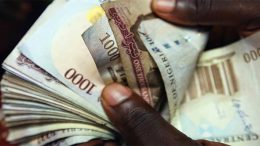
France has a financial system worth seven billion euros, compared with Germany’s four billion or the Spanish financial system’s three billion (because of Santander and BBVA). But the Bank of France’s balance sheet is supported by the CFA franc.
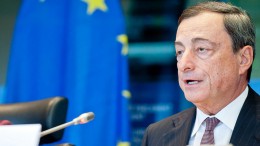
The possibility of a measured change in the ECB’s language, focused on the analysis of risks and the re-affirmation of its confidence in the recovery scenario, make more sense after seeing the minutes of the central bank’s April meeting. But this change is not expected until after the summer, with the September meeting seen as the big date in the diary.