The Evils Of Populism In Spanish Politics
It’s embarrassing that the PSOE is saying the labour reform has been negative and that the PP is promising to lower taxes when Spain has to negotiate new spending cuts with Brussels.
If we accept that the evolution of debt is a relevant factor in the explanation of the economic cycle, with the usual affirmation that the increase in debt explains the evolution in GDP, with a certain lag, then the credit cycle in Spain has been particularly intense.
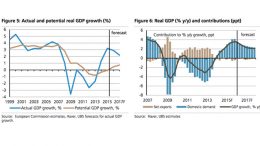
UBS | In this report, we focus on three pivotal questions that we consider crucial for investing in any security in Spain: First, what is the economic outlook for 2016/17, and what are the biggest economic policy challenges that the next government will face? Second, what are the likely scenarios for the outcome of the elections on 26 June? And third, what is the valuation and relative attractiveness of Spanish assets, how will asset markets react to different election outcomes, and what is or is not priced in?
F. Barciela / F. Gil Ljubetic | For a long time, and particularly since the crisis, it has been clear that the excessive level of payment default in our country is one of the reasons, if not the main one, behind the demise of our companies, above all SMEs.
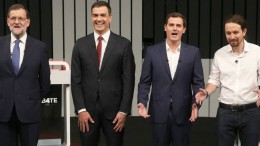
Ten million Spaniards watched the most important debate between candidates from the four parties which could form a Government in Spain on Monday night. And yet the participants did not clarify the most important point: Will there be a Government after the elections on June 26?
Economic forerunners from the four Spanish leading parties engaged themselves in a confusing TV debate on Sunday night. The moderator was much to blame as she hardly clarified the key policy issues, although the participants also proved unable to put forward a coherent analysis of what is at stake in these elections.
The thesis is reasonable and well-known: greater growth, lower deficit. But what happened in 2015 seems to corroborate another idea: a larger deficit (-5%) fuels the biggest growth in Europe (3.2%). So the government unilaterally raises the 2016 deficit target from 2.8% to 3.6%, while Brussels is going for 3.9%.
Spain uses subsidies, perhaps to excess, as a means of support for a whole range of activities which the public adminstrations delegate to third parties who, at times, are rather lax in terms of control. Spanish cinema as well as renewable energies are in included in this “help” box, and let’s not forget training courses and career updating training.
One of the effects of the long, deep crisis has been the redrawing of the political map in Spain, as well as in other European countries, but these new balances need to mature and consolidate. The process is underway, but the destination has not been written down. Over the last few years we have witnessed the confusion of the European social democrats.
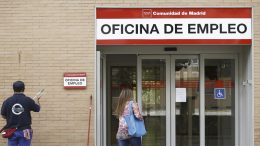
The average number of employed people signed on with the Social Security rose 1.13% to 17.661.840 in May from April, according to data released by the Employment and Social Security Ministry. Meanwhile, the number of jobless fell by 119,768 people in May from the previous month, standing at below 4 million for the first time in six years.