Search Results for deflation

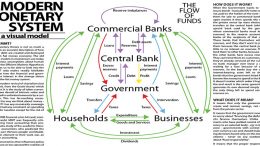
Modern monetary theory

Fast forward to MMT, please

Yves Bonzon (Julius Baer) | We are therefore moving much faster than expected towards a macroeconomic policy cocktail that combines monetary and fiscal policy (Modern Monetary Theory, MMT). In concrete terms, private agents (households and companies) who are currently losing precious income, must be able to continue to pay their bills in order to avoid a credit crunch against which monetary policy, even unconventional, can do nothing in isolation. Offering state guarantees for loans that relieve their immediate cash flow stress is a good solution in the very short term.


Sangrefría

Use Your Slow Brain, Please

Ives Bonzon (Julius Baer) | When the circumstances we face become extreme, the temptation to panic is great. As Daniel Kahne-man, the great psychologist and Nobel Prize – winning economist for his work on choices and decisions, explained, the human brain is subdivided between a fast brain focused on the risks to our survival and a slow brain useful for grasping complex problems. The pandemic scenario touches us emotionally at the heart of our most precious asset, our survival. Nevertheless, more than ever, it is crucial to apprehend the situation with our slow brain.


Quantitative easing now looks permanent – and has turned central banks into pseudo governments

Quantitative Easing Now Looks Permanent–And Has Turned Central Banks Into Pseudo Governments

via The Conversation | After a pause of a few months, the world’s leading central banks are “printing” money again to try to bolster their economies. Commonly known as quantitative easing or QE, the European Central Bank (ECB) resumed its programme just before the turn of the year. The backdrop is lukewarm growth, a looming recession in Germany, and persistent fears of Japanese-style deflation.


future

10 Themes for the Next 10 Years

BofAML | We enter the next decade with interest rates at 5,000-year lows, the largest asset bubble in history, a planet that is heating up, and a deflationary profile of debt, disruption and demographics. We will end it with nearly 1bn people added to the world, a rapidly ageing population, up to 800mn people facing the threat of job automation and the environment on the brink of catastrophic change. At the same time, 3bn more people will be connected online and global data knowledge will be 32x greater than today. The social, political and economic responses to these challenges, all heading to a boiling point this decade, will overhaul traditional paradigms.


Don't fear the Libra - worry about retail central bank digital currency instead

European banks – don’t fear the Libra

BOAML | For a while, we’ve been asked by clients how “big tech” might compete with the European banks. This question now seems to need an answer. We think the European banks sector faces plenty of challenges, but a head-on challenge from the likes of Amazon and Google etc aren’t among them, in our view.


Telefónica

Telefonica seeks growth: O.P. de 7.2 €/share vs 9.2 €/share before

Renta 4 | Telefonica shares hit their lowest level in August since 2006, since when they have recovered more than +10%. We see that investors have turned their back on the operator, disappointed by a business evolution which has not improved at an operational level and lacking confidence in a significant and sustained improvement in the future.


New regulation on anticrisis buffers.

Has the crisis really ended?

Miguel Navascués | There are many signs that the public think the crisis is over. One is the bankruptcy of Podemos, but there are many more. But has it ended? I doubt it.


Are there limits to the monetary policy

Rethinking the limits of monetary policy

José Ramón Díez Guijarro (Bankia Estudios) | In recent years there has been a debate in academic circles about the limits of monetary policy, once the barrier of negative interest rates has been crossed. With the additional problem that not even in Japan, where the natural interest rate has spent practically two decades in negative territory, has the central bank dared to dive deep into the zone of below zero interest rates, even though the economy has been stuck in a deflationary stagnation which has given birth to new economic jargon (japanisation) to refer to this type of economic process. The doubt is whether the Bank of Spain got is wrong by not using monetary policy more intensively or got it right be assessing the risks of traveling in this unknown territory as greater than the possible benefits.


euro

Whatever it takes, once again

“There is no probability of deflation, there is very low probability of recession, there are no threats of de-anchoring of inflation expectations,” Mario Draghi said on Thursday. The governor of the European Central Bank announced once again – as he did in March – that it will delay the rate hike at least until 2020 and kept all options open, especially in case economic prospects deteriorate. ECB’s decision is in line with those of other central banks in the world. The Fed has just opened the door to a rate cut, something that Australia and India have already done.