Search Results for deflation

consumption recovery 1

Is Inflation Coming Back? Three Routes To Higher Prices

Keith Wade (Schroders) | Some investors are growing worried that inflation is set to rise. How worried should investors be? Is there something unique about the Covid-19 shock which makes inflation more likely? We can see three areas of concern that could be routes to higher inflation: it could already be higher, it is just not being measured properly; the build up of liquidity could represent latent demand translated into inflation and the adverse structural effect of Covid-19.


china industry

China: 2021 GDP Growth To Bounce Back To 7.5%.

Jinyoue Dong & Betty Huang (BBVA Research) | Vaccination, accommodative monetary policy with “no sharp turnaround”, possible alleviation of China-US tension under Biden’s presidency and deflationary environment give Chinese authorities a chance for a short respite in 2021.


inflation course

What About Inflation? When It Will Come?

José Ramón Díez Guijarro (Bankia Estudios) | In the more recent past, the central banks have had enough to deal with trying to combat the risk of deflation linked to the structural changes of recent decades: globalisation, ageing population, digitalisation, etc. And now, practically without any solution of continuity, they have to face a crisis which may lead to new permanent “shocks” in inflation. These would derive from changes in the consumption patterns and from the accelerated digitalisation process. Or from the intensive use of non-conventional monetary policy measures.


negative rates2

The Blunder Of Negative Interest Rates

Miguel Navascués | The depression and the drop in inflation -or even deflation- have led the central banks to try a disastrous experiment: negative interest rates. Even Christine Lagarde speaks of putting the reference interest rate at -2%. This has been a mistake for several reasons. It discourages the holding of liquid deposits (which logically yield zero or negative), but it does not make people anticipate consumption, if prices stagnate or fall.


ECB Lagarde signing

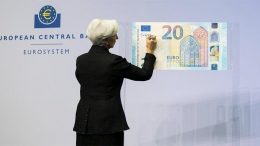
Monetary Policy And Fiscal Policy Merge

Flosbach von Storch | National debt-to-GDP ratios have already reached historic highs. Gross national debt will likely exceed 260 per cent of GDP in Japan by the end of the year, and reach around 140 per cent in the USA and around 100 per cent in the eurozone. Concerns about the high level of debt being unsustainable in the long run are at least theoretically unjustifiable as long as interest rates and government bond yields remain close to zero. This is because zero interest rates allow practically any deficit or mountain of debt to be easily funded.


Bonds

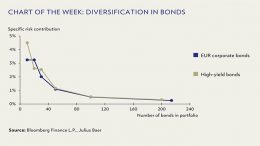
Managing Bonds In The Modern Monetary Theory Era

According to Ray Dalio, the founder of Bridgewater, 90% of governments’ attempts to reflate their economies have ultimately been successful over the past 200 years. In other words, after a few years of monetised deficits, trials and errors by policymakers, inflation will eventually rise.


Covid 19 new cases

Markets: Storm Clouds Ahead

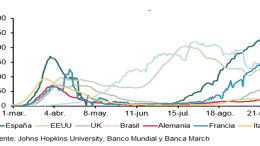
With less than 50 days before the US elections, market participants will be preparing their portfolios for turbulent times ahead. New Covid-19 cases continue to rise, and particularly in some US states and European countries, worryingly so. In our view, the proximity of the elections in the US leaves the debate about further fiscal stimulus in a no-man’s land, where it is difficult to see a quick and impactful resolution. In the picture, new cases of Covid-19 per million inhabitants per day


wages

Wage Income Cut By $3.5 Tr Globally In Q1’19, 5.5% Of World GDP

According to the International Labour Organization (ILO), wage income in the world has fallen by 10.7% in the first nine months of 2020, equivalent to $3.5 trillion or 5.5% of global GDP in the first three quarters of 2019. From the perspective of income, the positive side is that the figures do not take into account government subsidies which have provided a key safety net for families’ vital consumption.


Jerome Powell

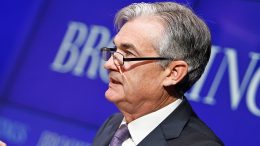
FED: Subtle To The Point Of Evanescence

The new strategy plays on the asymmetry of monetary policy: it is easier to let inflation accelerate in good times – which only entails not acting (keeping rates unchanged) – than propping it up in bad times, because at some point the latter would require ever more action which would collide with the zero bound limit to policy rates.


lagarde

“The ECB Is Monitoring Current Developments”

The ECB has left its policy stance unchanged after today’s GC meeting. The tone of the press conference was a touch less dovish than expected and President Lagarde has not signaled any large swing in policy in the near term. The overall message was clear: the ECB is monitoring current developments (including the EUR) and assessing the efficiency of the current policy measures before acting with more accommodation