Germany

Deutsche Boerse

What’s Behind The Uptick In The Long-Term Debt Rates?

The recent uptick in long-term debt rates, with the German bund leading the way, is not only due to investors’ disappointment after the last ECB meeting. Experts highlight other factors such as the global economy’s slightly better-than-forecast performance and the expectations for a generalised round of fiscal stimuli in key economic areas. Public debt for financing this expansion would increase and this exerts upward pressure on the rate curve.


merkel solitude

Germany’s Drag on Europe

I can tell you that the most eminent economists in Spain have continued to be wrong-footed since before the crisis. They are still clamouring for debt reduction, for a return to austerity, when what is slowly killing Europe is precisely that, the austerity spreading from Germany.


slower

Germany and France on a Slower Momentum

Recent surveys in both Germany and France indicate the perception on the part of companies that there will not be the necessary stimuli for economic activity to fuel an acceleration in the economic momentum.


german savers 1

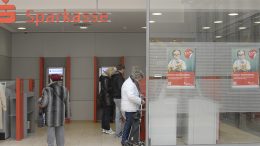
German Savers Could Change Habits As 10-Year Bond Yield Turns Negative

The aversion to risk has reached such a point that the German 10-year government bond yield has moved into negative territory for the first time in its history. The bund is one of the most sought after safe-haven assets, which has caused its yield to plummet to -0.02%. The only advantage of negative interest rates is that they might force Germans to reconsider their investment habits.


German business expectations

GDP Deflators Show Germany A Relative Loser, Long May It Continue

James Alexander via Historinhas | While still waiting for the 1Q16 official Eurostat NGDP figure for the Euro Area of 19 countries it has been interesting to have a look at the implied deflators for the currency bloc and its constituents. (Ireland, Slovakia, Cyprus and Luxemburg are all hopelessly late delivering GDP figures, and the first two don’t even seem to do it to Eurostat standards for calendar-adjusted data.)


17524080096 b141775e36 o 1

A Eurogroup Deal That Might Be Hard To Stomach

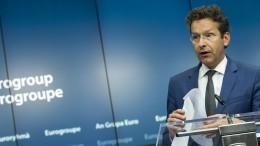
Yiannis Mouzakis via Macropolis | Following an 11-hour Eurogroup that brought back memories of other classic encounters between Greece and its lenders, an agreement was reached to disburse 10.3 billion euros from the programme’s financing in two tranches – next month and in September – as the much-contested debt issue was put on the table.


EU disunity on refugees

Locating Europe’s Pulse In The Refugee Crisis

Nick Malkoutzis via Macropolis | Neo-Nazis marching through the streets of Sweden, the far-right making its political presence felt in Austria, a beefed up military and police presence on borders in many parts of Europe and stinging criticism on moral and legal grounds of the “one in, one out” agreement with Turkey from human rights groups – these are just some of the signs of the existential crisis that the European Union is experiencing.


frauke petry

It’s Petry’s Time In Germany

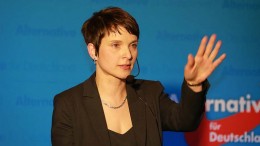
The migrant crisis has taken over German politics, although it is just one of the many issues concerning the European central power. The future of the euro is still pending. But some economists believe that the right-wing AFD party’s demand for the European process to be stopped is nonsense.


Schauble

Germany’s Das Kapital Or The Lack Thereof

BoAML Research | The German government has not been overly active in investment expenditure over the last couple of decades. The average share of gross government investment spending in GDP stood at 2.1% in 2015 – private investment was worth roughly 18% of total GDP.


yuan

G-20 Should Address Income Gap, Fragility of Financial Systems

Guntram B. Wolff via Caixin | G-20 ministers in Shanghai appeared to be aware of the importance of structural work. In particular, there was agreement in our panel discussions that the Base Erosion and Profit Shifting (BEPS) project of the OECD was an essential element to deal with tax avoidance and ensure that profits are taxed where economic activity generating it takes place.