oil

iran us

What US-Iran tensions mean for investors

Neil Dwane (Allianz) | The financial markets are signalling that the situation in the Middle East won’t get out of hand, but US-Iran friction could continue for some time. The defence industry and oil and gas-related sectors could remain well-supported, but overall we believe investors should be cautious yet patient. Look to higher-quality stocks with lower correlations to the broader market and “hunt for income” if headline volatility is a risk you wish to avoid.
Ecuador leaves the OPEC to avoid production cuts

Ecuador Leaves The OPEC To Avoid Production Cuts

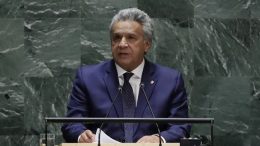
The decision was announced last October and came into effect in the new year. The Government of Lenín Moreno decided to leave the cartel, led by Saudi Arabia, to escape the procuction cuts, with which the organization intends to boost oil prices. Oil is the second largest source of income for Ecuador’s coffers.


energy sector

Oil: oversupply concerns

Carsten Menke (Julius Baer) | While the extension of oil production cuts was confirmed at the last OPEC meeting, discord emerged between Saudi Arabia and Russia about whether even deeper production cuts would be needed. Oil prices came under pressure, reflecting renewed concerns about global growth. We see prices trading slightly below fundamentally justified levels.


Repsol

Repsol: best placed for new sulphur reduction law

Renta 4 | Repsol Downstream investors’ day showed not only the firm’s resilience but also its capacity for future growth. We recall that within its growth target for operational cash flow from 4.6 Bn€ in 2017 to 6.5 Bn€ in 2020 at 50%/b, Downstream cash flow would grow 800 M€: 300 M€ from international margins, 200 M€ from improvements in profitability from greater efficiency and 300 M€ from expansion and new low carbon business preparing for the energy transition.