Germany and China Share Several Goals in Common
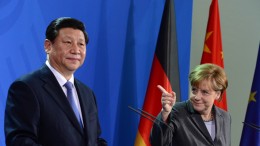
Michael Clauss via Caixin | Both countries want to solve the world’s crises, continue to innovate and develop sustainable economies – all reasons for optimism in the relationship.
Guan Qingyou via Caixin | The Chinese central bank’s decisions to trim banks’ reserve-requirement ratios and benchmark interest rates this year have all coincided with bad news, so it was hardly surprising that it would make cuts again on October 23, shortly after the National Bureau of Statistics said the country’s GDP growth rate for the third quarter fell to 6.9 percent.
BARCLAYS | The results of Sunday’s general election in Argentina have forced a run-off on November 22. Defying the opinion polls, with 97% of votes counted, Mauricio Macri (34.33%) finished very close to Daniel Scioli (36.86%). The two political adversaries have very different economic agendas.
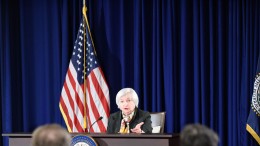
Better placed observers, such as the Financial Times, bet this week’s FOMC meeting should serve as a test of its members’ mood regarding the planned increase in US rates. Janet Yellen lacks the authority her predecessors commanded and wants to make sure this critical decision garners full support.
The markets sway to the rhythm of the central banks, but it’s not clear that monetary policy alone can solve the serious economic problems affecting most of the planet. Perhaps it would be a good thing to take heed of Summers idea that it is preferable to back productive investment and not the creation of bubbles supported by low interest rates.
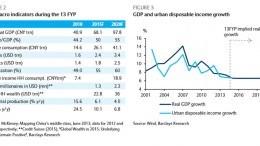
BARCLAYS | The 13th Five Year Plan (13FYP), the first to be produced under President Xi’s leadership, covers the period 2016 – 20. Despite some recent policy ‘hiccups’, we believe that the Chinese government remains committed to further reform and opening up of the economy.
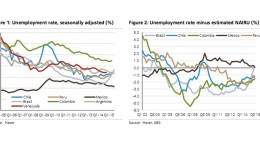
Brazil is an old hand at “catching up” with the rich developed countries, never fulfilling its dream of long-term prosperity. This is partly due to the vicious circle in which the emerging markets find themselves, the origin of which lies in the lack of investor confidence.
Yang Gang via Caixin | China also has second-most household wealth after the United States, according to an annual report by researchers at Credit Suisse Group, a leading global financial services company.
Following the oil price slump, both wealthy countries will relatively see their privileged economic position trimmed, but they can still capitalize on their status as oil producers, boosting production to defend market share and leading the European M&A market, respectively.
The free-trade agreement between the U.S., Japan and another nine Asia-Pacific countries (TTP) should speed up the negotiations between the European Union and the U.S. regarding The Transatlantic Trade and Investment Partnership (TTIP). These talks started over five years ago and there have been, and continue to be, some critical moments.